The most beautiful place in Scotland is widely considered the Scottish Highlands, with the Isle of Skye and Loch Ness close behind. Scotland’s most stunning Scotland travel destinations range from dramatic mountain landscapes to historic UNESCO-listed sites, offering unforgettable experiences across every season.
Scotland punches well above its weight as a travel destination. A country roughly the size of South Carolina somehow packs in ancient castles, brooding lochs, sea-battered coastlines, and some of the most dramatic highland scenery on the planet. Over 3.4 million international visitors travel to Scotland each year—and the numbers keep climbing.
This guide covers the most beautiful place in Scotland across six major regions, with practical Scotland travel tips for planning your trip, navigating the weather, and making the most of every mile. Whether you’re mapping out a Scotland road trip or flying in for a long weekend, you’ll find everything you need right here.
The Scottish Highlands: Where Drama Meets Wilderness
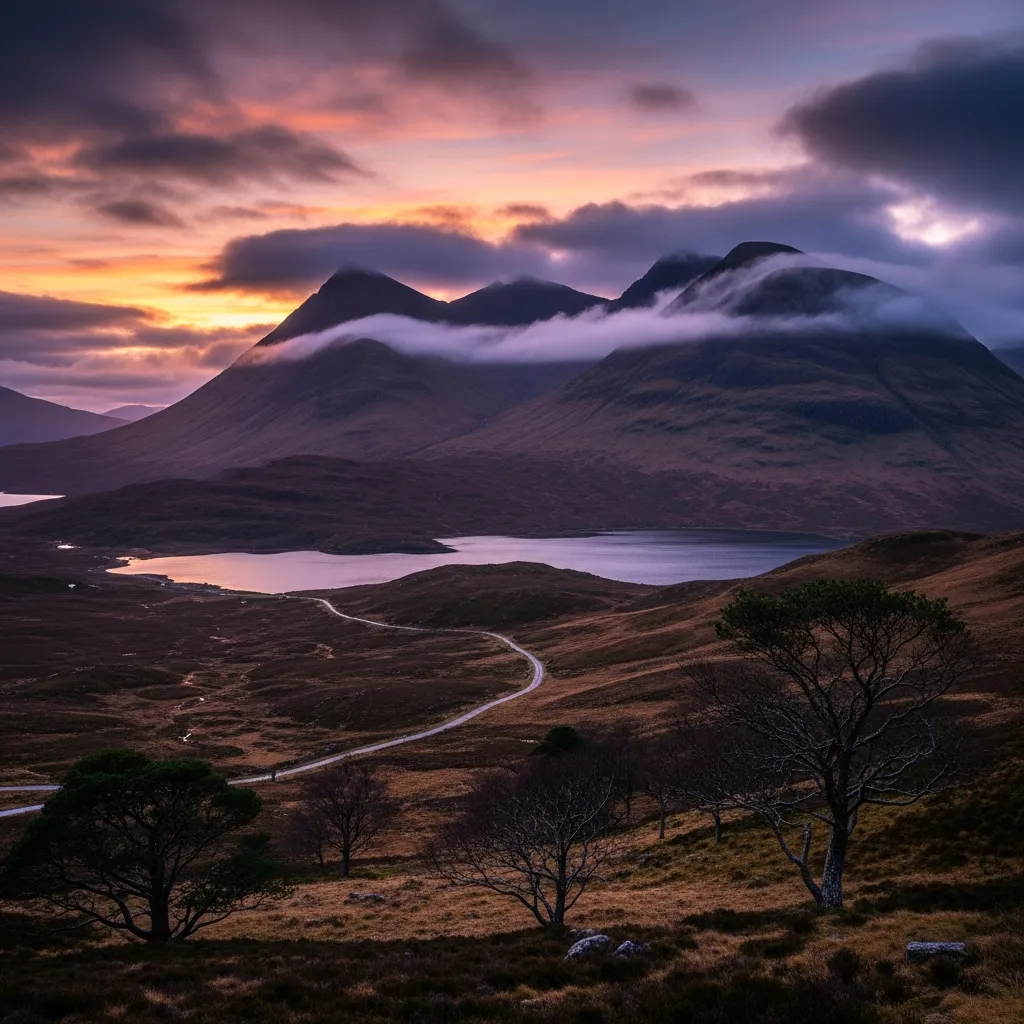
Few landscapes in the world stop you in your tracks quite like the Scottish Highlands. Stretching across the northern third of Scotland, this vast region is defined by rugged peaks, sweeping glens, and skies that seem to change by the hour. Ben Nevis—the UK’s highest mountain at 1,345 meters—anchors the landscape, while Glen Coe cuts south with its dark, brooding beauty.
The Highlands are genuinely one of the most beautiful places in Scotland, and not just for hikers. The driving roads alone are worth the trip. The A82 from Glasgow to Inverness runs alongside Loch Lomond and through Glen Coe, offering viewpoints that rival anything you’d find in a coffee table book.
When is the best time to visit the Scottish Highlands?
Scotland weather is notoriously unpredictable, but the Highlands are at their most dramatic from late September to November, when the heather fades and the hills glow amber and copper. Summer (June to August) brings long daylight hours—up to 18 hours near the solstice—ideal for hiking and photography. Winter visits reward the brave with snow-capped peaks and, on clear nights, a genuine chance of seeing the Northern Lights.
Travel tip: Pack waterproofs regardless of the season. Even on sunny days, conditions can shift within the hour.
Isle of Skye: Scotland’s Most Photographed Scotland Travel Destination
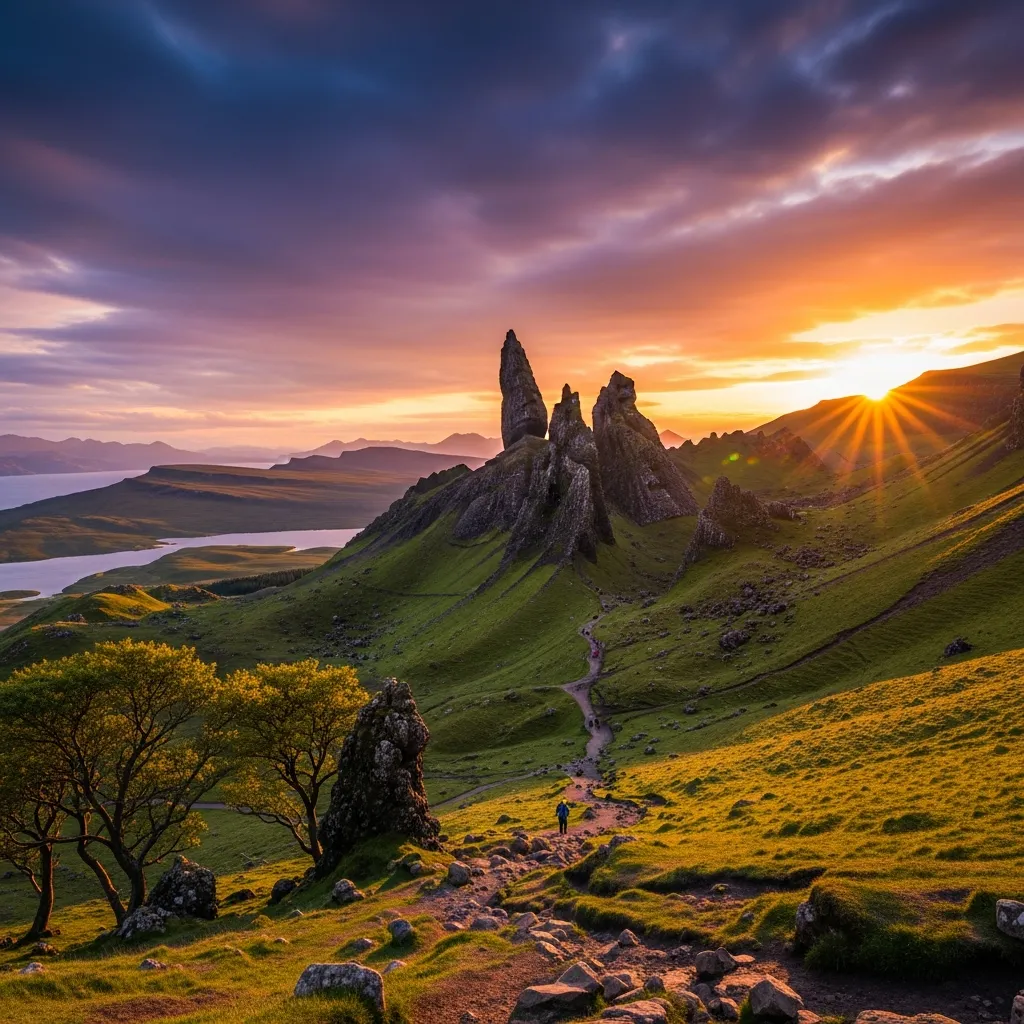
The Isle of Skye sits off Scotland’s northwest coast and has earned near-mythical status among travelers. The Quiraing, the Old Man of Storr, and the Fairy Pools have all become icons of Scotland travel destinations—and rightly so. The geology here is unlike anything else in the British Isles: black basalt columns, sea stacks, and ridgelines that look like something from a fantasy novel.
Skye is connected to the mainland by a road bridge, making it one of the more accessible stops on a Scotland road trip. From the bridge at Kyle of Lochalsh, you’re on the island within minutes. Most visitors base themselves in Portree, the island’s colorful capital, and day-trip to the major landmarks.
What are the best photography spots on the Isle of Skye?
- Old Man of Storr: Best at sunrise when mist clings to the pinnacles
- Fairy Pools: Clear turquoise water fed by the Cuillin mountains
- Neist Point Lighthouse: Stunning Atlantic views, especially at golden hour
- Quiraing: A collapsed landslide that created an eerie, otherworldly plateau
Scotland travel tips for Skye: arrive early at popular spots. By 10am in summer, the Fairy Pools car park is often full. A Scotland road trip map that prioritizes early starts will save you hours of frustration.
Loch Ness and the Surrounding Glens: Legend Meets Landscape
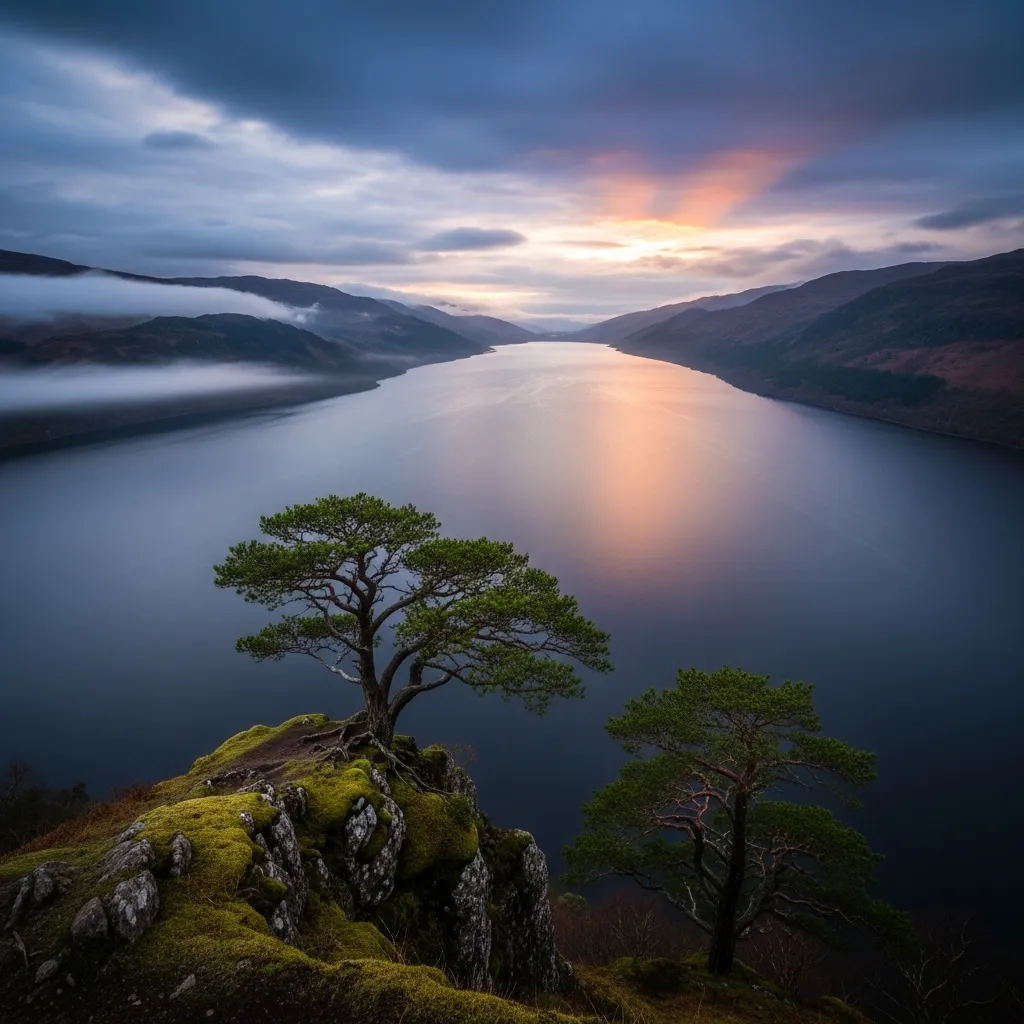
Loch Ness needs little introduction. The loch stretches 37 kilometers through the Great Glen fault and holds more fresh water than all the lakes of England and Wales combined. The legend of the Loch Ness Monster—Nessie—has drawn curious visitors since a sighting was reported in 1933, but the landscape itself is reason enough to visit.
Urquhart Castle, perched on the loch’s western bank, is one of the most beautiful Scotland travel destinations for anyone who loves history layered into scenery. Built in the 13th century and partially blown up in 1692 to prevent Jacobite use, its ruins frame the water perfectly.
The surrounding glens—Glen Moriston and Glen Affric in particular—are quieter and arguably more beautiful than the loch itself. Glen Affric is often called Scotland’s most beautiful glen, sheltering ancient Caledonian pinewoods that have stood for thousands of years.
How does Scotland weather affect a visit to Loch Ness?
Loch Ness sits in the Great Glen, which funnels wind and rain from the west. Scotland weather here tends to be wetter than the east coast. That said, overcast days actually enhance the atmosphere—the loch turns a deep, steely grey that makes the castle ruins look extraordinarily dramatic. Spring and early autumn offer the best balance of mild temperatures and manageable crowds.
Edinburgh and Its UNESCO Sites in Scotland: Where History Is Everywhere
Edinburgh is Scotland’s capital and one of Europe’s most visually striking cities. The Old Town and New Town together form a UNESCO World Heritage Site—one of the most significant UNESCO sites in Scotland—recognized for their architectural and historical significance. Edinburgh Castle dominates the skyline from its volcanic rock perch, while the Royal Mile connects it to the Palace of Holyroodhouse below.
What makes Edinburgh exceptional as a Scotland travel destination is the density of beauty. Within a 20-minute walk, you can move from medieval closes (narrow alleyways) to Georgian crescents, from a working parliament to a 14th-century church. Arthur’s Seat, an ancient volcano within the city limits, gives you panoramic views of the whole scene for free.
What are the best cultural experiences in Edinburgh for first-time visitors?
- Edinburgh Castle: Home to the Scottish Crown Jewels and the Stone of Destiny
- National Museum of Scotland: Free entry, extraordinary Scottish history collection
- Calton Hill: Best free viewpoint in the city
- The Scotch Whisky Experience: On the Royal Mile, ideal for rainy afternoons
- Greyfriars Kirkyard: Historic cemetery with remarkable stories behind every headstone
Scotland travel tip: Visit in August for the Edinburgh Festival Fringe—the world’s largest arts festival—or in December for the Hogmanay celebrations, among the most famous New Year events anywhere on earth.
Cairngorms National Park: Scotland’s Wild Heart
The Cairngorms is the largest national park in the UK, covering 4,528 square kilometers of ancient plateau, forest, and river valley. It’s also one of Scotland’s most underrated Scotland travel destinations—less visited than Skye or the Highlands’ popular spots, but no less spectacular.
The park is home to 25% of the UK’s threatened wildlife species, including red squirrels, ospreys, red deer, and the elusive Scottish wildcat. The Cairngorm plateau itself sits above 1,000 meters for much of its extent, making it one of the highest and coldest landscapes in Britain outside of winter mountain conditions.
How does Cairngorms National Park compare to the best places to visit in Switzerland?
It’s a fair comparison. The Cairngorms lack the sheer altitude of the Swiss Alps—Cairn Gorm’s summit reaches 1,245 meters versus Switzerland’s 4,000-meter peaks—but the Cairngorms offer something Switzerland rarely does at scale: genuine solitude. You can walk for hours on the plateau without seeing another person. For travelers who have visited the best places to visit in Switzerland and found them crowded during peak season, the Cairngorms offer a compelling alternative. Aviemore serves as the main base, with good transport links and a range of accommodation.
Coastal Gems and Hidden Scotland Travel Destinations
Scotland’s coastline runs for over 18,000 kilometers when you include its 800 islands. Much of it remains genuinely undiscovered by international visitors.
Some of the most beautiful places in Scotland along the coast include:
- Sandwood Bay (Sutherland): A 6km hike rewards you with a beach that consistently ranks among Europe’s most beautiful—and has no road access
- St Abbs Head (Scottish Borders): Dramatic cliffs, a lighthouse, and a National Nature Reserve popular with divers
- Kilt Rock (Isle of Skye): A sea cliff with columnar basalt that resembles the pleats of a kilt, with a waterfall dropping directly to the sea
- The Garvellachs: A chain of islands in the Firth of Lorn with early Christian monastic ruins dating to the 6th century
- Achmelvich Bay (Assynt): Turquoise water and white sand that looks implausibly Caribbean
Planning Your Trip: Scotland Travel Tips, Flights, and Road Trip Essentials
Google Flights vs Kayak: Which should you use to book flights to Scotland?
Both tools are useful, but they work differently. Google Flights excels at flexible date searching—its calendar view lets you instantly see the cheapest days to fly across an entire month or year. It also has a price tracking feature that alerts you when fares drop. Kayak, by contrast, aggregates from more booking platforms and includes budget airline results that Google Flights sometimes misses. The practical answer: use Google Flights to identify the cheapest travel window, then cross-check on Kayak to ensure you’re not missing a cheaper fare on a smaller carrier. Edinburgh (EDI) and Glasgow (GLA) are the main international airports.
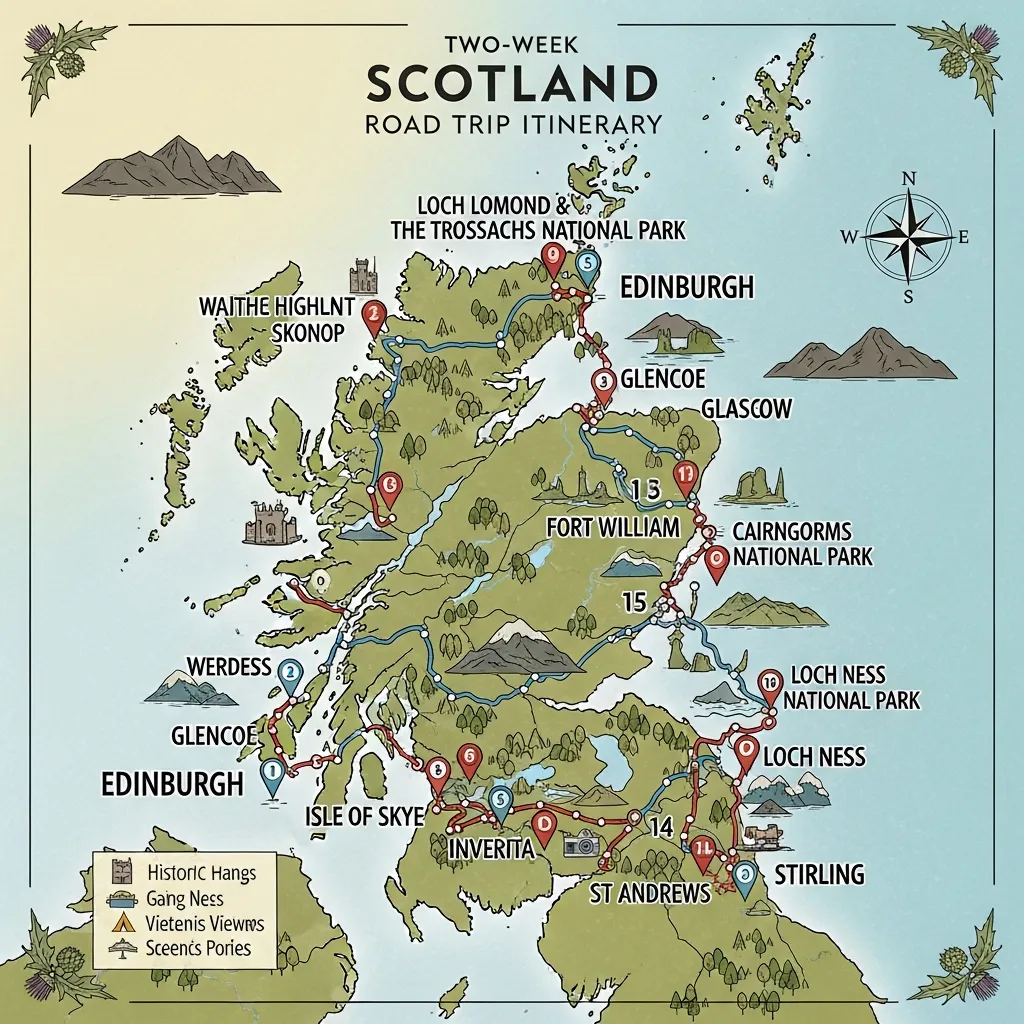
What does a Scotland road trip map look like for a two-week itinerary?
A classic two-week Scotland road trip map runs roughly as follows:
Days 1–3: Edinburgh (city base, day trips to East Lothian)
Days 4–5: Perthshire (Pitlochry, Dunkeld, Loch Tummel)
Days 6–7: Cairngorms National Park (Aviemore base)
Days 8–9: Inverness, Loch Ness, and the Great Glen
Days 10–12: Northwest Highlands (Torridon, Assynt, Cape Wrath)
Days 13–14: Isle of Skye
Driving distances are manageable but roads can be single-track in remote areas. Budget extra time and always give way to oncoming traffic at passing places.
Scotland Weather: A Season-by-Season Guide
|
Season |
Conditions |
Best For |
|---|---|---|
|
Spring (Mar–May) |
Mild, unpredictable, fewer crowds |
Wildflowers, lambing season, waterfalls |
|
Summer (Jun–Aug) |
Warmest, longest days, busiest |
Hiking, festivals, island-hopping |
|
Autumn (Sep–Nov) |
Golden colors, cooler, quieter |
Photography, deer rut, whisky tours |
|
Winter (Dec–Feb) |
Cold, snow possible, dramatic |
Hogmanay, skiing, Northern Lights |
Scotland weather is defined by its variability. The west coast receives significantly more rainfall than the east. Always layer and always carry waterproofs—even in July.
Start Planning Your Scotland Trip Now
Scotland rewards the traveler who slows down. The most beautiful place in Scotland isn’t a single location—it’s the cumulative experience of driving through a misty glen, stumbling across an empty beach, or watching the light change over a highland loch at dusk. Each of the Scotland travel destinations covered here offers something genuinely distinct, and none require a huge budget to enjoy.
Use the Scotland road trip map framework above as your starting point. Check Scotland weather patterns for your target travel dates. Compare Google Flights vs Kayak to find the best fare. And above all, leave room in your itinerary for detours—because Scotland’s most memorable moments tend to be the unplanned ones.
Book your flights, pack your waterproofs, and go.
Frequently Asked Questions
What is the most beautiful place in Scotland?
The most beautiful place in Scotland depends on what you value most. The Scottish Highlands are the most dramatic overall, while the Isle of Skye offers the most visually striking individual landscapes. Glen Affric is often named the most beautiful glen, and Edinburgh is the most beautiful urban destination. Most travelers find the northwest Highlands—particularly Assynt and Torridon—to be the most remote and genuinely awe-inspiring Scotland travel destination.
When is the best time to visit Scotland?
The best time to visit Scotland is May to September for warmth and long daylight hours, or September to October for autumn colors with fewer crowds. Scotland weather is unpredictable year-round, so packing layers is essential regardless of when you travel.
How do I plan a Scotland road trip?
Start with a Scotland road trip map that anchors your route around key hubs: Edinburgh, Inverness, and Portree on Skye. Rent a car from Edinburgh or Glasgow, allow for single-track roads in remote areas, and book accommodation well in advance during summer. A two-week itinerary comfortably covers the Highlands, Skye, Loch Ness, and Edinburgh.
What should I pack for Scottish weather?
Pack waterproof layers, sturdy walking boots, a windproof jacket, and quick-dry clothing. Scotland weather changes rapidly, even in summer. Midges (tiny biting insects) are prevalent near water and woodland from May to September—bring insect repellent or a head net for remote areas.
Are UNESCO sites in Scotland worth visiting?
Yes. The UNESCO sites in Scotland—including Edinburgh’s Old and New Town, the Heart of Neolithic Orkney, New Lanark, and the Forth Bridge—are among the country’s most historically significant Scotland travel destinations. Edinburgh’s UNESCO-listed area alone is walkable and largely free to explore.
How do I compare Google Flights vs Kayak for booking flights to Scotland?
Use Google Flights to search flexibly across dates and track price changes over time. Use Kayak to cross-reference and find fares from budget carriers that Google Flights may not surface. Together, the two tools give the most complete picture of available fares to Edinburgh or Glasgow airports.
What are the best Scotland travel tips for first-time visitors?
Key Scotland travel tips include: book Isle of Skye accommodation months in advance; arrive early at popular sites; carry cash in rural areas; fill up your fuel tank before entering remote regions; and check road conditions if traveling in winter. Mobile signal is limited in many Highland areas—download offline maps before you go.
Where can I find a Scotland road trip map?
Visit Scotland (visitscotland.com) offers free downloadable Scotland road trip maps and themed driving routes, including the North Coast 500, the Borders Historic Route, and the Whisky Trail. Google Maps and apps like Gaia GPS work well for navigation, though offline downloads are recommended for remote areas.
What Scotland travel destinations are family-friendly?
Edinburgh, Loch Ness, the Cairngorms, and St Andrews are the most family-friendly Scotland travel destinations. The Cairngorms has excellent visitor centers, Highland wildlife, and accessible walking trails. Loch Ness appeals to children through its mythology and the interactive Loch Ness Centre exhibition.
How does Scotland compare to the best places to visit in Switzerland?
Scotland and the best places to visit in Switzerland both offer mountain scenery, outdoor adventure, and historic culture—but in very different ways. Switzerland has higher peaks, more reliable weather, and world-class ski infrastructure. Scotland offers wilder, more remote landscapes at a lower cost, with far fewer crowds in most areas. For budget travelers or those seeking solitude, Scotland often wins. For guaranteed sunshine and alpine infrastructure, Switzerland has the edge.
What are the best free activities in Scotland?
Scotland offers exceptional free experiences: hiking in the Cairngorms, walking Edinburgh’s Royal Mile, visiting the National Museum of Scotland, exploring Calton Hill, swimming at Sandwood Bay, and watching red deer in Glen Coe. Scotland has a legal right to roam across most land, meaning access to mountains, glens, and coastline is free and unrestricted.
How many days do I need to see Scotland?
A minimum of seven days allows you to cover Edinburgh, the Highlands, and Loch Ness. Fourteen days is ideal for adding the Isle of Skye, the northwest coast, and the Cairngorms. Three weeks gives enough time to explore the islands—Orkney, Shetland, or the Outer Hebrides—which are Scotland travel destinations that reward a slower pace.