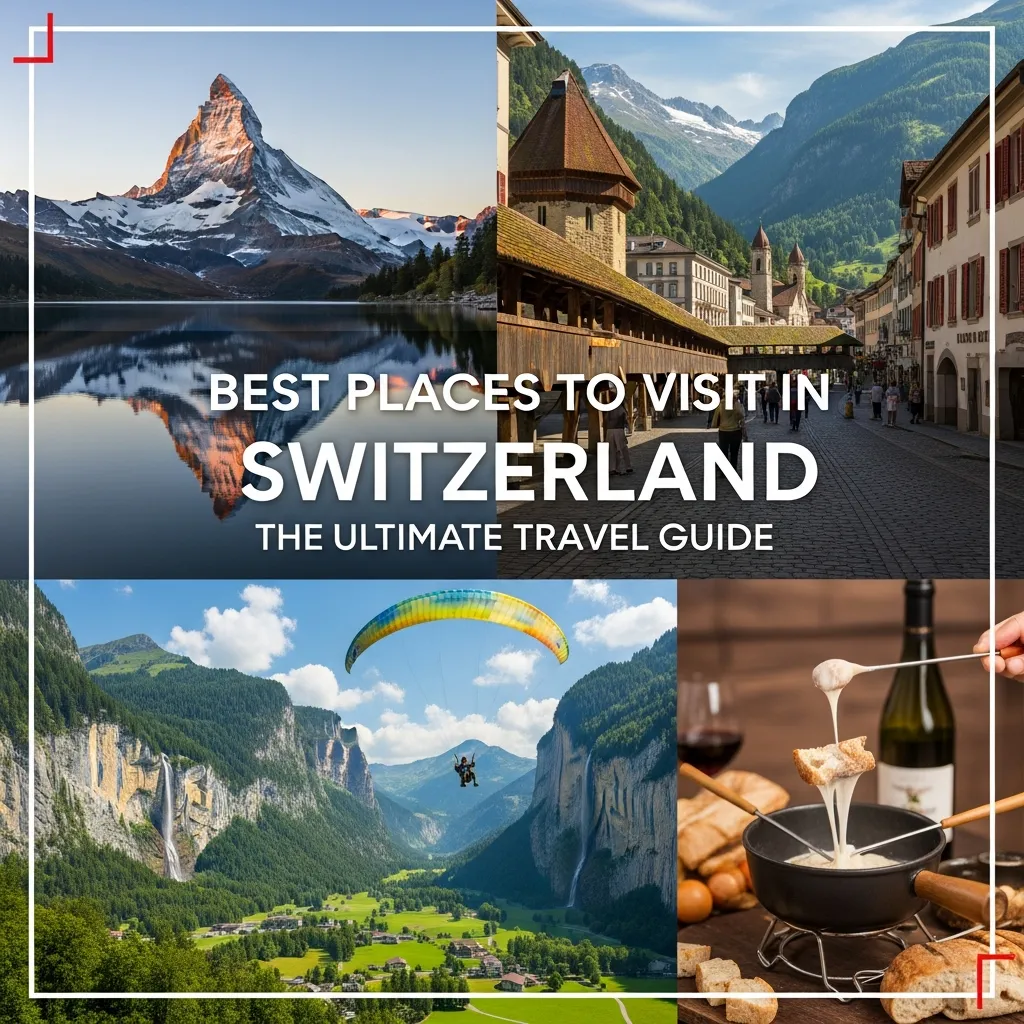
Switzerland ranks among Europe’s most rewarding travel destinations, offering Alpine peaks, crystal-clear lakes, medieval cities, and hidden valleys. The best places to visit in Switzerland include Zermatt, Interlaken, Lucerne, Zurich, Geneva, Bern, Lauterbrunnen, Appenzell, and Montreux—each offering a distinct and memorable experience.
Few countries pack as much variety into such a compact space as Switzerland. Snow-capped mountains rise dramatically above emerald valleys. Centuries-old city centers sit alongside cutting-edge cultural institutions. And lakes so still they mirror the sky stretch between cantons that speak four different languages. Switzerland doesn’t just offer one kind of travel experience—it offers dozens.
This guide covers the best places to visit in Switzerland for every type of traveler: the adrenaline seeker who wants to paraglide over the Alps, the city explorer chasing world-class museums and Michelin-starred restaurants, and the wanderer who’d rather follow a waterfall path through a valley most tourists never find.
Whether you’re planning your first Swiss trip or your fifth, you’ll find actionable insights on where to go, what to do, and how to make the most of every day. The best places to visit in Switzerland are many—this guide helps you choose the ones that match your travel style.
Why Switzerland Consistently Ranks as a Top Travel Destination
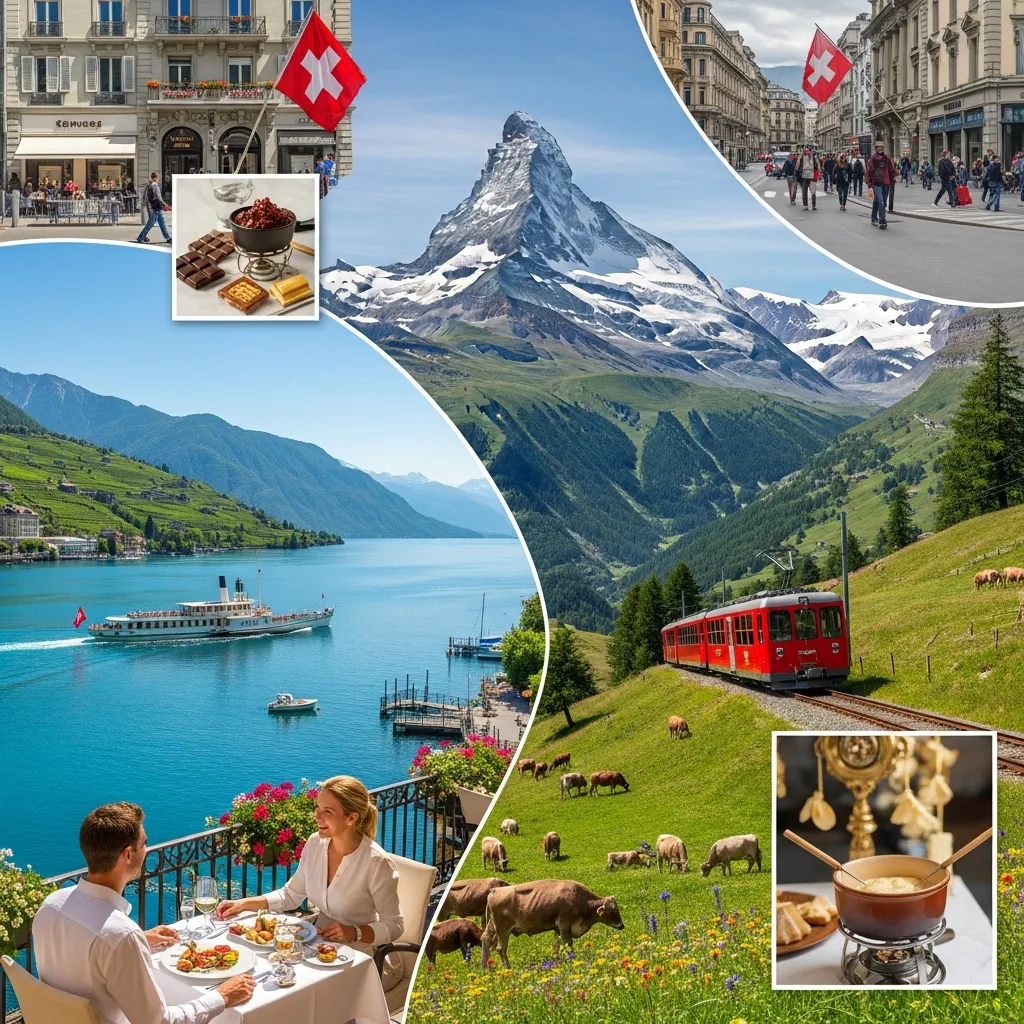
Switzerland draws over 40 million tourist arrivals annually, according to Switzerland Tourism. The reasons go beyond scenery. The country’s public transport system—often cited as one of the world’s best—makes even remote Alpine villages accessible without a car. Safety levels are among the highest in Europe. And the concentration of UNESCO-listed sites, outdoor activities, and culinary experiences per square kilometer is virtually unmatched.
The best places to visit in Switzerland are also accessible year-round. Summer reveals wildflower meadows and long-distance hiking trails. Winter transforms the landscape into one of Europe’s premier ski destinations. Spring and autumn offer fewer crowds, lower prices, and dramatic weather that photographers love.
The Best Places to Visit in Switzerland for Nature Lovers
Zermatt and the Matterhorn: Switzerland’s Most Iconic View
Zermatt sits at 1,620 meters above sea level in the Valais canton, and it’s arguably the single most photographed destination in Switzerland. The Matterhorn—that instantly recognizable pyramid peak—dominates the skyline and draws mountaineers, hikers, and photographers from every corner of the world.
Activities: In summer, over 400 kilometers of marked hiking trails fan out from the village. The Matterhorn Glacier Trail and the Five Lakes Walk rank among the most scenic. In winter, the Zermatt ski area connects to Cervinia in Italy, offering one of Europe’s largest ski regions with over 360 kilometers of runs.
Best time to visit: July through September for hiking; December through April for skiing. The village is car-free, accessible only by electric taxi or the Matterhorn Gotthard Bahn train from Täsch.
Zermatt consistently appears at the top of every list of the best places to visit in Switzerland—and once you see the Matterhorn at sunrise, you’ll understand why.
Interlaken: The Adventure Capital of Switzerland
Positioned between Lake Thun and Lake Brienz, Interlaken is the undisputed hub for outdoor adventure in the best places to visit in Switzerland. The surrounding Bernese Oberland region offers some of the most dramatic scenery in the Alps.
Thrilling activities: Paragliding from Beatenberg with views across both lakes, canyoning in the Saxeten Gorge, skydiving above the Jungfrau region, and white-water rafting on the Lütschine River. Interlaken’s activity operators are well-regulated and safety-focused, making it accessible even for first-timers.
Lakes Thun and Brienz: Both lakes offer boat cruises, stand-up paddleboarding, and lakeside cycling paths. Lake Brienz, with its turquoise glacial meltwater, is particularly striking on clear days.
Lucerne and Lake Lucerne: Old Town Charm Meets Alpine Drama
Lucerne is one of the best places to visit in Switzerland for travelers who want history, scenery, and accessibility all in one destination. The city sits at the northern end of Lake Lucerne, surrounded by the pre-Alps, and is easy to reach from Zurich in under an hour by train.
Chapel Bridge and Old Town: The Kapellbrücke, built in 1333, is Europe’s oldest covered wooden bridge and features interior paintings depicting Swiss history. The cobblestone Old Town (Altstadt) clusters around the Reuss River, filled with painted facades, medieval walls, and independent cafés.
Mountain excursions: Mount Pilatus (accessible by the world’s steepest cogwheel railway) and Mount Rigi (nicknamed the “Queen of the Mountains”) both offer panoramic views over six cantons and the Alps. Day trips from Lucerne to both peaks are well-organized and straightforward.
Grindelwald: Gateway to the Eiger and Jungfraujoch
Grindelwald is one of the best places to visit in Switzerland for mountain immersion without the exclusivity of Zermatt. The village sits directly beneath the north face of the Eiger—one of the most notorious walls in alpine climbing history.
Hiking trails: The First Cliff Walk, a 45-meter-long hanging bridge and walkway bolted to a cliff face, offers unobstructed views across the Grindelwald valley. The trail to Bachalpsee lake, especially at dawn, produces mirror reflections of the Wetterhorn and Schreckhorn peaks.
Jungfraujoch—Top of Europe: At 3,454 meters, the Jungfraujoch is Europe’s highest railway station. The journey from Grindelwald by cogwheel train passes through the Eiger’s interior tunnel. At the top: an ice palace, a research station, and on clear days, a view stretching to Germany and France.
Urban Gems: Best Places to Visit in Switzerland for Culture and City Life
Zurich: Switzerland’s Largest City and Cultural Powerhouse
Zurich is simultaneously Switzerland’s financial capital and one of its most dynamic cultural cities. With a population of around 440,000, it consistently ranks among the world’s most livable cities in annual quality-of-life indices.
Old Town, Lake Zurich, and shopping: The Altstadt spans both banks of the Limmat River, with Niederdorf on the east side offering independent bookshops, wine bars, and street food. The western Langstrasse district has evolved into the city’s most creative neighborhood. Lake Zurich offers swimming in summer from public Badis (outdoor lake baths)—a distinctly Swiss urban experience.
Cultural attractions: Zurich’s Kunsthaus art museum holds the largest art collection in Switzerland, with works by Monet, Picasso, and Giacometti. The city also hosts the Zurich Film Festival each September, attracting international filmmakers and critics.
Geneva: International Diplomacy Meets Lakeside Beauty
Geneva hosts more international organizations than any other city in the world—including the United Nations European headquarters, the International Red Cross, and CERN. This international character gives Geneva a cosmopolitan atmosphere unlike anywhere else in the best places to visit in Switzerland.
Key sights: The Jet d’Eau fountain shoots water 140 meters above Lake Geneva and is visible from across the city. The Old Town (Vieille Ville) is compact and walkable, centered on St. Peter’s Cathedral, which offers rooftop views over the lake. The Palais des Nations, the UN’s European headquarters, offers guided tours.
Lake Geneva and vineyards: The Lavaux wine region, a UNESCO World Heritage Site, stretches along the northern shore of Lake Geneva east of Lausanne. A 14-kilometer hiking trail through the terraced vineyards is one of the most scenic walks in Switzerland.
Bern: The Understated Swiss Capital
Many travelers bypass Bern in favor of Zurich or Geneva, but Switzerland’s capital rewards those who stop. The Old Town (Altstadt) is a UNESCO World Heritage Site, characterized by six kilometers of arcaded walkways (Lauben) that protect pedestrians from rain and snow.
Key attractions: The Bear Park (Bern’s name derives from “Bär,” meaning bear) houses a small family of brown bears along the Aare River. The Federal Palace (Bundeshaus) offers free guided tours when parliament is not in session. The Zytglogge—a medieval astronomical clock tower dating to 1530—performs an animated show four minutes before each hour.
Hidden Treasures: Less-Explored Best Places to Visit in Switzerland
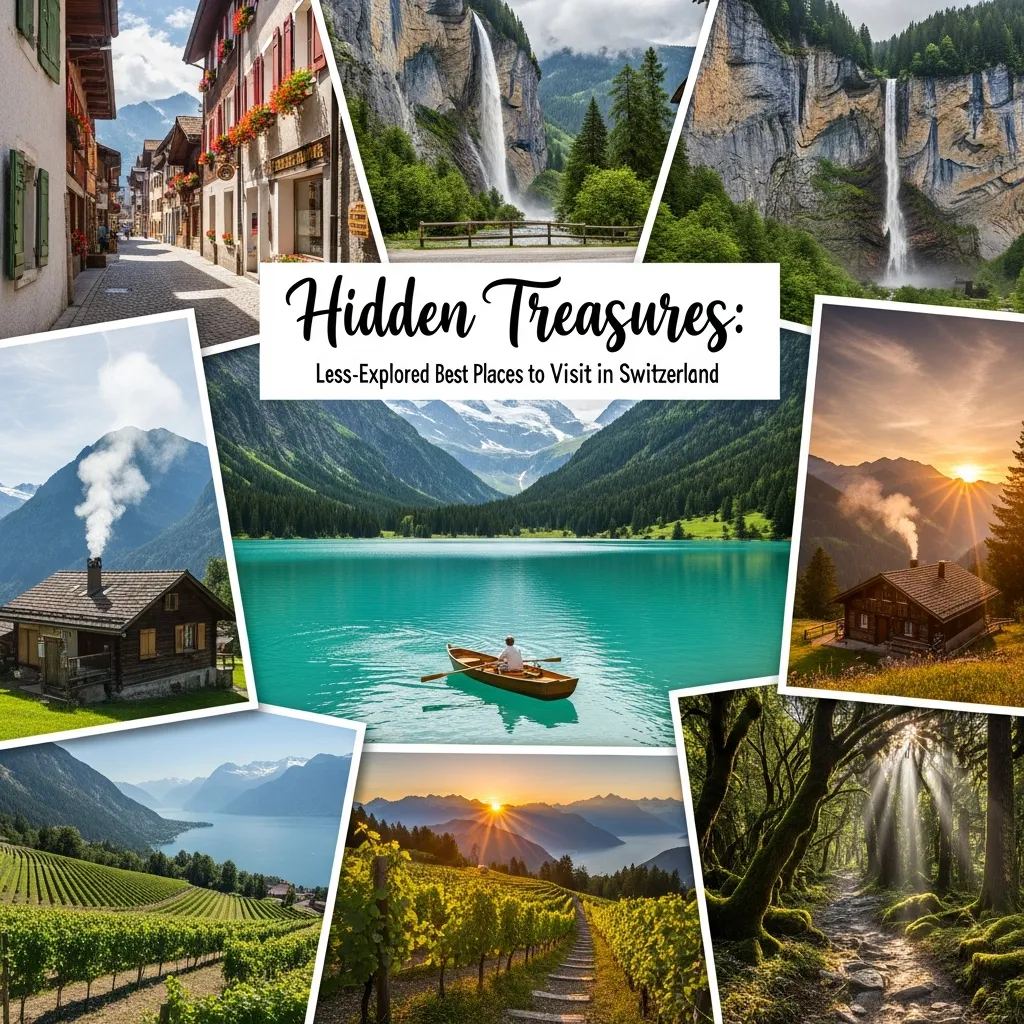
Lauterbrunnen Valley: The Valley of 72 Waterfalls
Lauterbrunnen is one of the most dramatic glacial valleys in the Alps, carved by glaciers into sheer rock walls nearly 300 meters high. Seventy-two waterfalls pour down these cliff faces, including the 297-meter Staubbach Falls—which inspired both Goethe and Lord Byron.
Trümmelbach Falls: A series of ten glacier waterfalls inside the mountain, accessible by underground funicular. Up to 20,000 liters of water per second thunder through the rock during peak melt season.
Villages: Wengen and Mürren, both car-free villages perched on cliffs above the valley, offer some of the best mountain views in Switzerland and far fewer crowds than Zermatt or Grindelwald.
Appenzell: Where Traditional Swiss Culture Runs Deep
Appenzell, in northeastern Switzerland, represents the country’s folk traditions with more authenticity than almost anywhere else in the best places to visit in Switzerland. The landscape is rolling rather than jagged—green hills dotted with farmhouses and cowbells rather than dramatic peaks.
Folk customs: Appenzell Innerrhoden was the last Swiss canton to grant women the right to vote (in 1990, by court order), a reminder that Swiss regional culture can be deeply conservative. The Landsgemeinde, an open-air democratic assembly held annually in the town square, dates back centuries and remains active today.
Appenzeller cheese and beer: The Appenzeller cheese—washed in a secret herbal brine recipe unchanged since the 13th century—is produced exclusively in the region. Local breweries produce craft beers that pair well with traditional raclette and rösti.
Montreux: Switzerland’s Riviera
Montreux sits on the eastern end of Lake Geneva, sheltered by the Alps and warmed by a microclimate mild enough to support palm trees along the lakeside promenade. It’s among the most elegant of the best places to visit in Switzerland.
Chillon Castle: The 12th-century Château de Chillon, built on a rocky island just outside Montreux, is Switzerland’s most visited historic monument. Lord Byron carved his name into a pillar in the dungeon in 1816—it’s still visible.
Montreux Jazz Festival: Held each July, the Montreux Jazz Festival is one of the world’s most prestigious music events, founded in 1967. Past performers include Miles Davis, Nina Simone, and David Bowie. Free outdoor stages run throughout the festival period.
Planning Your Trip to the Best Places to Visit in Switzerland
Transportation: Swiss Travel Pass, Trains, and Buses
Switzerland’s public transport network is the backbone of any trip to the best places to visit in Switzerland. The Swiss Travel Pass offers unlimited travel on trains, buses, boats, and most mountain railways for a set number of days. Passes are available for 3, 4, 6, 8, or 15 days and can be purchased before arrival from Swiss Travel System’s official website.
Trains run on time—Swiss punctuality is not a cliché, it’s a genuine operational standard. Even the most remote Alpine villages are connected by PostBus, the yellow postal buses that navigate mountain roads year-round.
Accommodation: From Luxury to Budget
Switzerland offers accommodation across every price range, though it ranks among Europe’s more expensive destinations. Geneva and Zurich hotel rates are comparable to London and Paris. Budget travelers do better in smaller towns like Lauterbrunnen, Appenzell, or Grindelwald, where family-run guesthouses (Gasthäuser) offer clean rooms and generous breakfasts at reasonable rates. Camping is also popular and well-facilitated, with campsites near most major destinations.
Food and Drink: Swiss Delicacies to Savor
Swiss cuisine draws from German, French, and Italian culinary traditions depending on the region. Must-try dishes include:
- Cheese fondue: Best in the Fribourg and Gruyères regions, made with local Gruyère and Vacherin cheeses
- Raclette: Melted cheese scraped over potatoes, pickles, and onions—a winter staple
- Rösti: A crispy potato cake, particularly popular in German-speaking cantons
- Birchermüesli: The original Swiss breakfast, invented by physician Maximilian Bircher-Benner in Zurich around 1900
- Swiss chocolate: Lindt, Toblerone, and Läderach all originate in Switzerland; factory tours and chocolate shops are abundant
Practical Tips: Currency, Language, and Etiquette
Switzerland uses the Swiss Franc (CHF), not the Euro. Many tourist areas accept Euros, but the exchange rate is usually unfavorable. Credit cards are widely accepted, but carry cash for mountain huts and rural markets.
The country has four official languages: German (spoken by roughly 63% of the population), French (23%), Italian (8%), and Romansh (1%). In most tourist areas, English is spoken fluently. A basic phrase or two in the local language goes a long way.
Tipping is not obligatory—service charges are included in restaurant bills by law—but rounding up the total is appreciated.
Beyond Switzerland: Exploring Other World-Class Destinations
Once Switzerland captures your heart, the urge to explore further becomes hard to resist. Here are a few destinations worth adding to your travel list.
Best Places to Visit in Iceland: Iceland’s landscape—geysers, black sand beaches, volcanic craters, and the Northern Lights—offers a completely different kind of natural drama than Switzerland. The Best Places to Visit in Iceland include Reykjavik, the Golden Circle, the Snæfellsnes Peninsula, and the Westfjords. Iceland rewards shoulder-season travelers with fewer crowds and competitive prices.
Best Places to Visit in Vietnam: Southeast Asia’s most culturally layered destination, Vietnam stretches over 1,600 kilometers from north to south. The best places to visit in Vietnam range from the ancient trading port of Hội An to the karst seascape of Hạ Long Bay, the highland coffee farms of Đà Lạt, and the street food chaos of Hồ Chí Minh City. Vietnam remains one of the most affordable long-haul destinations for European and North American travelers.
Google Flights Hacks for Finding the Best Deals: Google Flights is one of the most powerful free tools for travel planning. Key Google Flights hacks include: enabling price tracking alerts, using the Explore map to find the cheapest destinations from your departure airport, searching in incognito mode to avoid algorithmic price inflation, and using the date grid to identify the cheapest travel windows. Booking 6–8 weeks in advance typically yields the best fares for European destinations.
Beyond the Itinerary—Immersive Travel Experiences: The most memorable trips often happen away from curated tourist trails. Staying in a Swiss family’s farmhouse through Airbnb, volunteering with a local alpine conservation project, or joining a traditional cheese-making workshop are examples of going beyond the itinerary. These experiences build genuine cultural understanding and create stories worth telling.
Best Food Destinations Around the World: Switzerland holds its own in any conversation about the best food destinations around the world, but the global shortlist is long. San Sebastián in Spain, Oaxaca in Mexico, Tokyo in Japan, and Lyon in France consistently rank at the top of culinary travel rankings. Food tourism—traveling specifically to explore a destination’s cuisine—is one of the fastest-growing segments of global travel.
Your Unforgettable Journey Through the Best Places to Visit in Switzerland Awaits
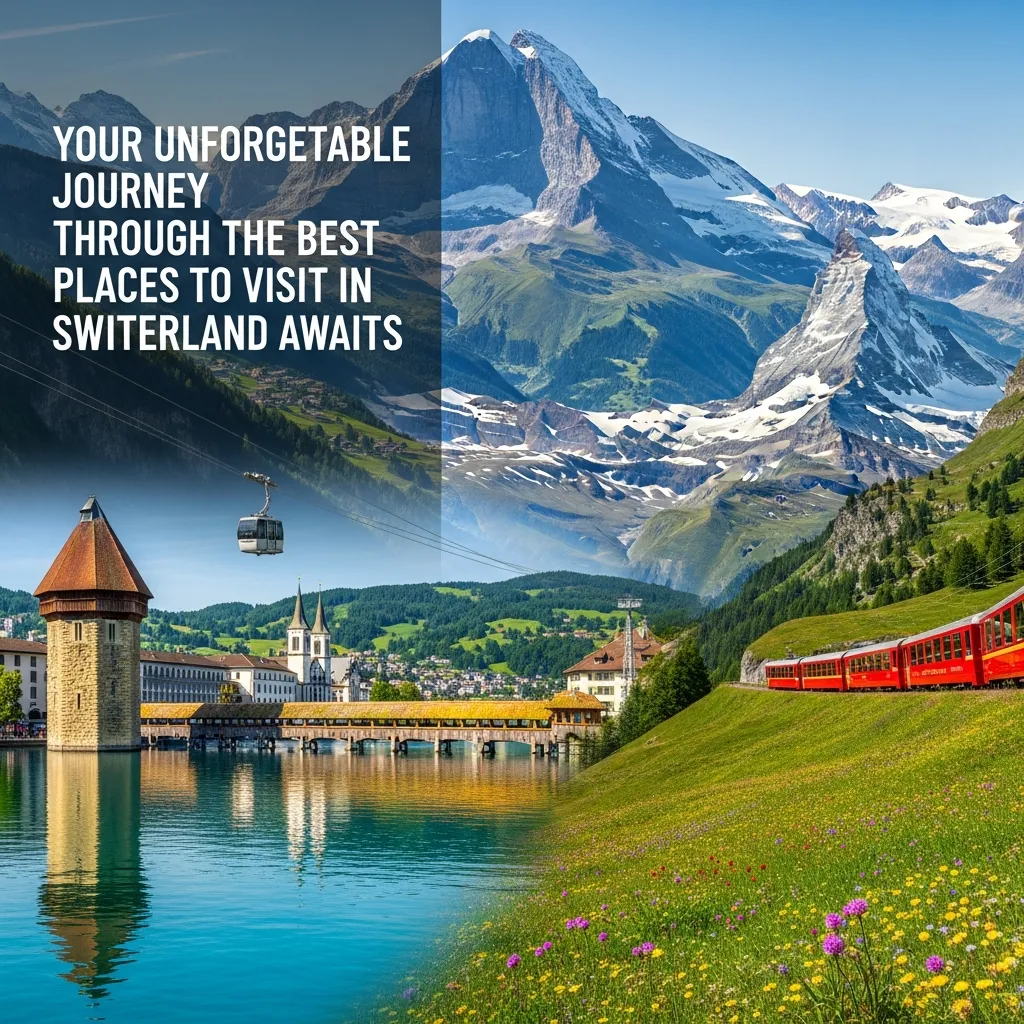
Switzerland rewards travelers who take the time to look beyond the postcard version. Yes, the Matterhorn is real and as magnificent as advertised. Yes, the cheese fondue is worth every calorie. But the best places to visit in Switzerland also include a valley of 72 waterfalls that most tourists drive past, a northeastern canton where folk democracy still happens in a town square, and a lakeside riviera where Byron once carved his name into a dungeon wall.
The country is compact enough to see several destinations in a single trip, yet rich enough that every return visit uncovers something new. Start with the iconic—Zermatt, Lucerne, Zurich—then let curiosity carry you deeper into the valleys, smaller towns, and slower rhythms that make Switzerland more than just a destination. It becomes a standard against which you measure every other place you visit.
Plan your route, buy your Swiss Travel Pass, and go.
Frequently Asked Questions About the Best Places to Visit in Switzerland
What are the best places to visit in Switzerland for first-time travelers?
For first-timers, the best places to visit in Switzerland are Lucerne, Interlaken, Zermatt, and Zurich. These destinations offer the clearest introduction to Swiss landscapes, culture, and activities, and are all well-connected by public transport.
How many days do you need to visit the best places to visit in Switzerland?
A minimum of 7–10 days allows you to cover 3–4 major destinations comfortably. A two-week trip lets you include both nature-focused and urban destinations without rushing. Switzerland’s efficient rail network means you can move between cities and mountain villages quickly.
Is Switzerland expensive to visit?
Switzerland is one of Europe’s most expensive countries. Budget travelers can expect to spend CHF 100–150 per day (roughly $110–$165 USD) covering hostel accommodation, self-catering, and selective activities. Mid-range travelers should budget CHF 250–400 per day. The Swiss Travel Pass often pays for itself within two to three days of use.
What is the best time to visit the best places to visit in Switzerland?
The best time to visit Switzerland depends on your priorities. July and August offer the best hiking conditions and warmest temperatures. December through March is ideal for skiing. April–May and September–October offer lower prices, fewer crowds, and dramatic seasonal scenery. There is no truly bad time to visit.
Which Swiss city should I visit—Zurich, Geneva, or Bern?
Choose Zurich for urban energy, nightlife, and the Kunsthaus art museum. Choose Geneva for international culture, Lake Geneva, and the Lavaux wine region. Choose Bern for a quieter, more authentically Swiss city experience with its UNESCO-listed arcaded Old Town. All three can be visited in a single trip using the Swiss Travel Pass.
Is the Swiss Travel Pass worth buying?
For most visitors spending more than five days in Switzerland, the Swiss Travel Pass delivers strong value. It covers trains, buses, lake boats, and most urban transport systems, plus free or discounted entry to many museums and mountain railways. Calculate your estimated journeys before purchasing to confirm it suits your itinerary.
What are the best places to visit in Switzerland for skiing?
The best Swiss ski resorts are Zermatt (connected to Cervinia, Italy), Verbier, St. Moritz, Saas-Fee, and Davos-Klosters. Zermatt and Saas-Fee offer year-round glacier skiing. St. Moritz is known for luxury. Verbier attracts off-piste enthusiasts.
Can you visit Switzerland on a budget?
Yes, with planning. Staying in hostels (Switzerland has an excellent SJH hostel network), buying food at Migros or Coop supermarkets, using the Swiss Travel Pass, and visiting free attractions like Old Towns, lake swimming spots, and hiking trails significantly reduces costs. Avoiding peak summer and Christmas periods also cuts accommodation prices.
What is the most scenic train journey in Switzerland?
The Glacier Express between Zermatt and St. Moritz is frequently cited as the world’s most scenic train journey, passing through 91 tunnels and over 291 bridges across nearly eight hours. The GoldenPass Line from Lucerne to Montreux and the Bernina Express from Chur to Tirano (Italy) are equally spectacular alternatives.
What language is spoken in the best places to visit in Switzerland?
Switzerland has four official languages. German is spoken in Zurich, Lucerne, Bern, Interlaken, Zermatt, and Grindelwald. French is spoken in Geneva, Montreux, and the Lake Geneva region. Italian is spoken in Ticino (Lugano, Locarno). Romansh is spoken in parts of Graubünden. English is widely understood in all major tourist destinations.
Is Switzerland safe for solo travelers?
Switzerland is consistently ranked among the safest countries in Europe. Crime rates are low, public transport is reliable, and emergency services are excellent. Solo travelers—including women traveling alone—report high levels of comfort and safety across both urban and rural destinations.
What are the best food experiences in Switzerland?
The best food experiences in Switzerland include a traditional cheese fondue dinner in Gruyères, fresh lake fish (Felchen) on the shores of Lake Lucerne, a raclette evening in a Zermatt mountain restaurant, chocolate tasting at a Zurich confiserie, and a wine tasting along the Lavaux UNESCO vineyard trail above Lake Geneva.