
Group Travel Insurance is a specialized policy designed to cover multiple travelers under one plan, making it ideal for families, friends, corporate teams, or educational groups. It provides financial protection against trip cancellations, medical emergencies, travel delays, and lost baggage while simplifying administration and reducing overall costs. By choosing the right policy, group organizers can ensure safety, convenience, and peace of mind for every traveler.
Organizing a trip for a large number of people requires immense coordination, patience, and planning. While you might have the itinerary perfected and the accommodations booked, unforeseen events can quickly derail even the most meticulously planned itinerary. That is where group travel insurance becomes a critical component of your planning process.
Group travel insurance is a specialized type of coverage designed specifically for parties of ten or more people traveling together to the same destination. Instead of requiring each individual to purchase their own separate policy, a group plan covers everyone under a single, comprehensive umbrella. This approach not only simplifies the administrative work but often reduces the overall cost per person.
Securing this coverage is essential because the risks multiply with every additional traveler. If one person experiences a medical emergency, or if a natural disaster forces you to cancel the entire trip, the financial losses can be devastating. By investing in a group policy, you ensure that everyone is protected against unexpected cancellations, medical emergencies, and travel delays, allowing your group to focus on the experience rather than the “what ifs.”
Understanding the Nuances of Group Coverage

To fully leverage the benefits of a group policy, you need to understand how insurance providers define and categorize groups.
Defining “Group” for Insurance Purposes
Insurance companies generally define a “group” as an assembly of 10 or more individuals traveling together. The specific number can occasionally vary by provider, but 10 is the standard benchmark. These individuals do not need to be related, but they usually must have the same travel dates and destination.
Types of Groups Covered
Providers offer policies tailored to a variety of groups. Family reunions, corporate retreats, friends embarking on a milestone vacation, and educational student tours all qualify. Each of these categories might have slightly different risk profiles. For example, a corporate retreat might prioritize coverage for expensive business equipment, while an educational tour might focus heavily on medical evacuation for students.
Key Differences from Individual Policies
The most significant difference between group and individual policies is the administrative ease. A single group leader can manage the policy, make the purchase, and handle the paperwork. Additionally, group policies often bypass the need for extensive medical questionnaires from each traveler, making it much easier to secure coverage for individuals with minor pre-existing conditions, provided they are medically stable at the time of purchase.
Core Benefits of Group Travel Insurance
A robust policy offers several layers of protection. Understanding these core benefits helps group organizers communicate the value of the insurance to the travelers.
Trip Cancellation and Interruption
Cancellations are one of the most common reasons travelers file insurance claims. Group policies cover cancellations and interruptions due to illness, severe accidents, or natural disasters at the destination. If your group cannot travel for a covered reason, the insurance provides reimbursement for non-refundable expenses like flights, hotel deposits, and prepaid tour fees.
Medical Emergencies and Evacuation
Getting sick or injured abroad can be terrifying and expensive. Group travel insurance provides coverage for hospital stays, doctor visits, and necessary medications. If a facility cannot provide the required level of care, the policy will cover emergency medical evacuation to a better-equipped hospital or repatriation back home.
Baggage Loss, Delay, and Damage
Airlines lose luggage every day. If your group’s bags are lost, stolen, or severely damaged, the insurance reimburses you for the value of the items up to the policy limit. If baggage is merely delayed, policies typically offer a stipend to purchase essential clothing and toiletries so the travelers can continue their trip comfortably.
Travel Delay and Missed Connections
Flight delays can cause a domino effect, resulting in missed cruise departures or connecting flights. When travel is delayed for a covered reason (like severe weather or mechanical breakdown), the policy covers the cost of necessary accommodations and meals. It also helps reimburse the additional travel expenses required to catch up with the itinerary.
Specialized Coverages for Group Travel
Standard coverage is great, but some groups require a more tailored approach.
“Cancel for Any Reason” (CFAR) for Groups
CFAR is an optional upgrade that allows you to cancel a trip for reasons not explicitly covered by the standard policy—such as fear of travel or a sudden change of mind. While CFAR adds to the premium cost and usually only reimburses 50% to 75% of the prepaid costs, it is a smart choice for group organizers who want maximum flexibility and peace of mind.
Adventure and Sports Coverage
If your group is heading to Colorado for a ski trip or Costa Rica for scuba diving, standard policies might exclude these high-risk activities. Adventure and sports coverage add-ons ensure that injuries sustained during these specific activities are covered. Always review the exclusions list to know exactly which sports require additional riders.
“All-Inclusive” vs. “Named Perils” Policies
Organizers must choose between “all-inclusive” (comprehensive) policies and “named perils” policies. Named perils policies only cover the specific situations listed in the document. All-inclusive policies generally offer broader protection. For groups, all-inclusive is almost always the safer bet, as it minimizes the risk of denied claims.
Factors Influencing Group Travel Insurance Costs
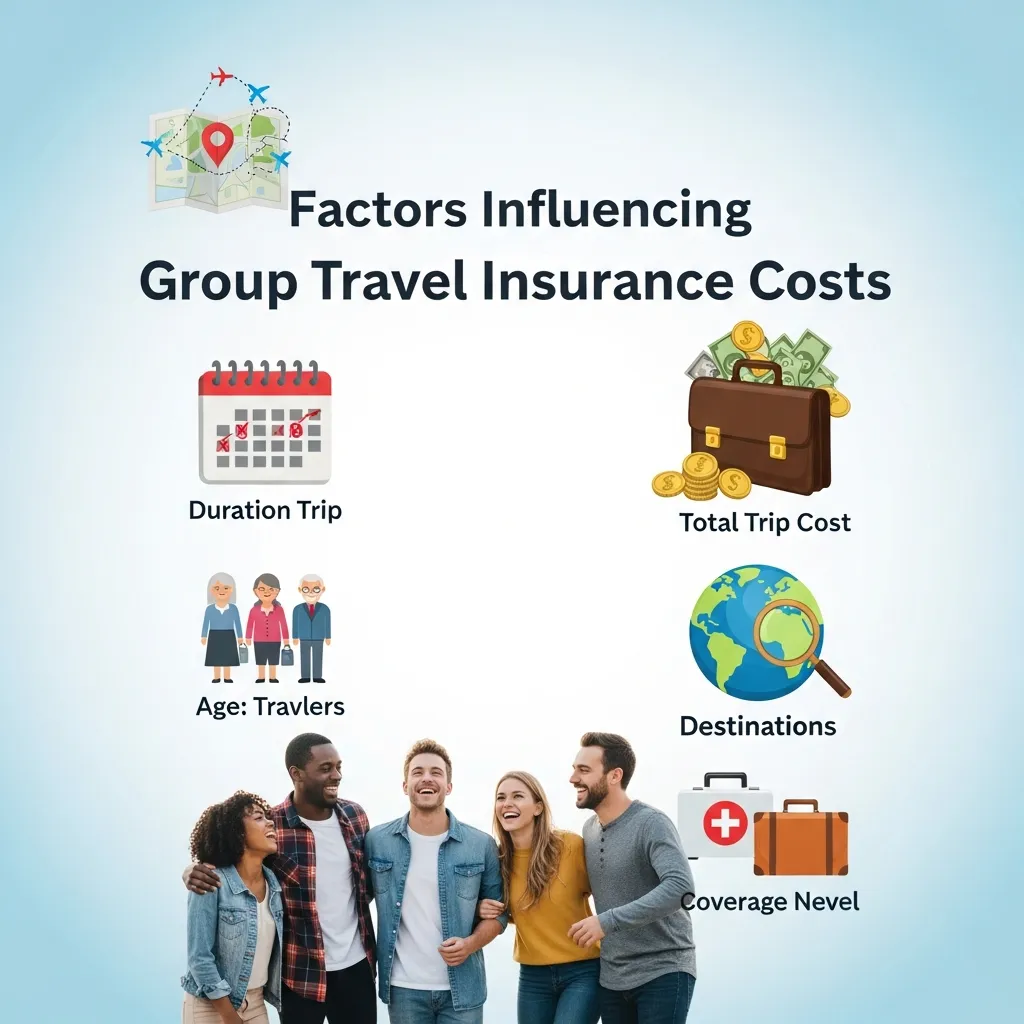
Several elements dictate the final price tag of a group policy.
- Group Size and Age Demographics: Larger groups often secure better per-person rates. However, if the group includes many elderly travelers, the premium may increase due to higher medical risks.
- Trip Duration and Destination: A three-day domestic trip costs significantly less to insure than a three-week international excursion. Destinations with high healthcare costs also drive up premiums.
- Level of Coverage and Deductibles: Choosing higher coverage limits or a lower deductible increases the upfront cost of the policy.
- Optional Add-ons and Riders: Adding CFAR or hazardous sports coverage will increase the total price.
How to Choose the Best Group Travel Insurance Policy
Selecting the right provider requires a strategic approach.
Assessing Group Needs and Risks
Start by evaluating the specific risks associated with your itinerary and the demographics of your travelers. A high school trip to Washington D.C. has vastly different risk factors than a corporate team-building trip in the Swiss Alps.
Comparing Quotes from Multiple Providers
Never settle for the first quote you receive. Use online comparison tools to look at offerings from several reputable providers. Pay attention to the coverage limits, not just the premium price.
Understanding Policy Wordings and Exclusions
Read the fine print. Ensure you understand what constitutes a “covered reason” for cancellation and exactly what pre-existing condition waivers require. Knowing the exclusions upfront prevents unpleasant surprises during the claims process.
The Importance of Customer Support
A policy is only as good as the company’s ability to help you in a crisis. Look for providers that offer 24/7 global emergency assistance and have strong reviews regarding their claims handling process.
The Purchase Process: From Quote to Policy
Buying group travel insurance is a structured process.
Gathering Necessary Group Information
You will need accurate information for every traveler. This includes full legal names, dates of birth, primary states of residence, and the total trip cost per person.
Online vs. Agent-Assisted Purchase
While purchasing online is convenient, working with a specialized travel insurance agent can be highly beneficial for large groups. Agents can explain complex terms, negotiate group rates, and ensure no critical coverage is overlooked.
Policy Documentation and Distribution
Once purchased, the provider will send the policy documents. The group leader must distribute the policy details, emergency contact numbers, and policy numbers to every member of the group.
Managing Claims: A Step-by-Step Guide for Group Organizers
If something goes wrong, the group organizer often steps in to facilitate the claims process.
What to Do Immediately After an Incident
Contact the insurance provider’s 24/7 emergency assistance hotline immediately, especially in a medical emergency. They can direct you to approved facilities and start a paper trail.
Required Documentation for Claims
Insurance companies require proof of loss. Save every receipt, medical report, police report, and airline delay confirmation. Without proper documentation, the claim will likely be denied.
Communication with the Insurance Provider
Stay in regular contact with the claims adjuster. Respond promptly to any requests for additional information to keep the process moving forward.
Case Studies and Real-World Scenarios
To illustrate the value of this coverage, consider a few potential scenarios.
Corporate Retreat Gone Wrong
A tech company booked a retreat in Florida. Two days before departure, a hurricane damaged the resort, forcing a cancellation. Because the company purchased group insurance, they recovered $40,000 in non-refundable flights and hotel deposits, saving their annual budget.
Family Vacation with Unexpected Medical Emergency
A family of 15 traveled to Italy. The grandfather suffered a severe heart event requiring immediate hospitalization and eventual medical transport back to the US. The group policy covered the $85,000 medical bill and the costly medical evacuation flight.
Educational Tour Interrupted
A high school group was in Japan when an earthquake struck. The insurance provider’s emergency assistance team helped coordinate safe accommodations and re-booked flights to get the students home safely, covering the unexpected lodging and flight change fees.
Legal and Regulatory Considerations
Handling a group policy means managing sensitive information.
Data Privacy and Group Member Information
Group leaders collect dates of birth and sometimes medical information. It is crucial to handle this data securely, complying with local privacy laws and ensuring the insurance provider uses secure data encryption.
Consumer Protection Laws
Insurance is a highly regulated industry. Familiarize yourself with the “free look period,” a legally mandated window (usually 10 to 15 days) during which you can cancel the policy for a full refund if it does not meet your needs.
The Future of Group Travel Insurance

The travel insurance landscape is shifting rapidly.
Impact of Technology
Artificial intelligence is streamlining the claims process, allowing simple claims (like baggage delay) to be approved in minutes rather than weeks. Telemedicine is also becoming a standard inclusion, giving travelers 24/7 digital access to doctors while abroad.
Evolving Traveler Needs
As remote work and digital nomadism grow, group policies are adapting to cover “workcations” and longer-term group stays, offering more flexible durations and coverage options tailored to modern travel habits.
Empowering Safer Group Adventures
Securing group travel insurance transforms a potentially stressful organizing experience into a confident, secure undertaking. By covering trip cancellations, medical emergencies, and logistical hiccups, these policies protect both the financial investment of the trip and the physical well-being of the travelers.
When you take the time to compare policies, understand the fine print, and communicate the benefits to your group, you lay the foundation for a successful journey. With the right protection in place, your group can navigate the globe safely, knowing that a safety net is there to catch them if the unexpected occurs.
Conclusion – Group Travel Insurance
In today’s unpredictable travel environment, Group Travel Insurance is not just an optional add-on—it is a necessity for any organized trip. From protecting against unexpected cancellations to covering costly medical emergencies abroad, it acts as a financial safety net for the entire group.
By understanding coverage options, comparing providers, and selecting the right policy based on your group’s needs, you can avoid major risks and focus on enjoying the journey. Whether it’s a corporate retreat, family vacation, or student tour, investing in group travel insurance ensures a safer, smoother, and more confident travel experience for everyone involved.
Frequently Asked Questions (FAQ) – Group Travel Insurance
1. What is Group Travel Insurance?
Group Travel Insurance is a single insurance policy that covers multiple travelers (usually 10 or more) traveling together on the same trip.
2. Who should buy Group Travel Insurance?
It is ideal for families, friends, corporate teams, school groups, and tour groups traveling together.
3. Is Group Travel Insurance cheaper than individual plans?
Yes, it is often more cost-effective because the premium is shared among all members, reducing the cost per person.
4. What does Group Travel Insurance cover?
It typically covers trip cancellations, medical emergencies, emergency evacuation, baggage loss, and travel delays.
5. Does Group Travel Insurance cover pre-existing conditions?
Some policies may offer limited coverage for pre-existing conditions if certain conditions are met, such as purchasing the policy early.
6. Can one person manage the entire policy?
Yes, usually a group leader can purchase and manage the policy for all members, simplifying the process.
7. What happens if one member cancels the trip?
Depending on the policy, individual cancellations may be covered without affecting the rest of the group.
8. Does it include emergency medical evacuation?
Yes, most Group Travel Insurance plans include emergency evacuation and repatriation coverage.
9. Are adventure activities covered?
Basic policies may not cover high-risk activities, but you can add adventure or sports coverage as an add-on.
10. What is “Cancel for Any Reason” (CFAR)?
CFAR is an optional upgrade that allows you to cancel your trip for reasons not listed in the standard policy and receive partial reimbursement.
11. How do I choose the best Group Travel Insurance plan?
Compare coverage limits, exclusions, claim process, customer reviews, and ensure it matches your group’s travel needs.
12. When should I buy Group Travel Insurance?
It is best to purchase Group Travel Insurance as soon as you book your trip to maximize coverage benefits and eligibility.