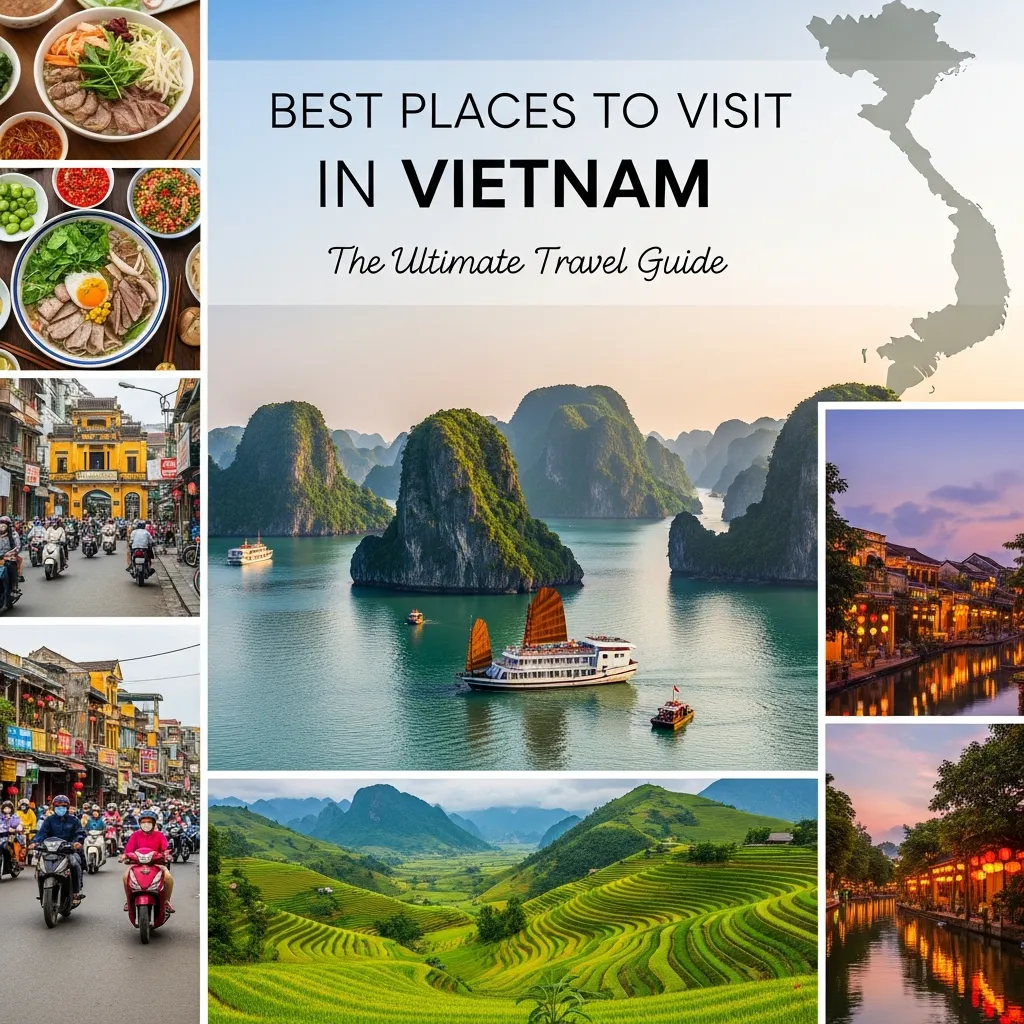
Vietnam is one of the best places to visit in the world, offering a remarkable mix of ancient history, dramatic landscapes, and vibrant street culture. From the karst cliffs of Ha Long Bay to the lantern-lit streets of Hoi An, this guide covers the top destinations across every region, plus practical tips to help you plan your trip.
Few countries pack as much variety into one stretch of land as Vietnam. Running roughly 1,650 kilometers from north to south, this Southeast Asian nation transitions from misty mountain villages to imperial citadels to sun-soaked tropical islands—sometimes within just a few hours of travel. Cuisine changes dramatically from region to region. Architecture shifts from French colonial facades to ancient Japanese merchant houses. The sheer diversity is hard to overstate.
Vietnam has also become increasingly accessible. Budget airlines now connect major cities domestically, international routes have expanded, and a growing network of hostels, boutique hotels, and family homestays means travelers can explore comfortably at almost any budget. Whether you’re a solo backpacker, a couple on a honeymoon, or a parent flying with children for the first time, Vietnam has something genuinely worth your time.
This guide explores the best places to visit in Vietnam—region by region—along with hidden gems that rarely make it onto mainstream itineraries, and practical advice to help your trip run smoothly.
Northern Vietnam: Historical Charm and Natural Wonders
Hanoi: One of the Best Places to Visit in Vietnam for Culture, History, and Street Food
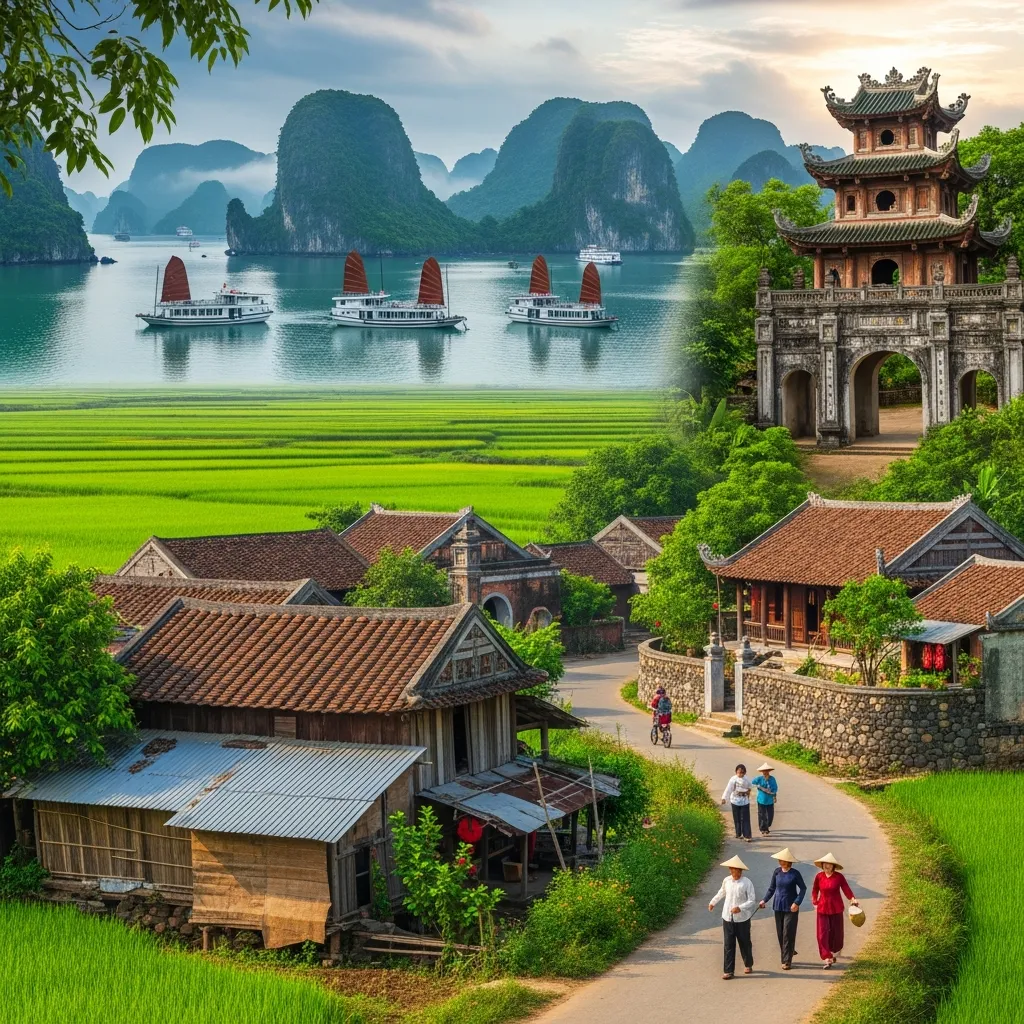
Hanoi is one of the best places to visit in Vietnam for travelers who enjoy history, culture, and authentic local life. As Vietnam’s capital and one of Asia’s oldest cities, Hanoi rewards slow travel with a rich mix of French colonial architecture, ancient temples, bustling street markets, and traditional neighborhoods. Around almost every corner, the city reveals another layer of its past, from Buddhist landmarks to communist-era monuments and long-standing local eateries.
The Old Quarter is the heart of the city and one of the most memorable urban areas in the country. Its historic streets, once organized by trade guilds, still offer a vibrant and atmospheric introduction to northern Vietnam. Nearby, Hoan Kiem Lake provides a quieter contrast, with Ngoc Son Temple set on a small island connected by a striking red bridge.
Hanoi is also widely known for having some of the best food in the country, which is one reason it continues to rank among the best places to visit in Vietnam. Travelers can sample local specialties like bun cha, pho, and the city’s famous egg coffee while exploring lively markets and hidden alleyways. For anyone planning a trip through northern Vietnam, Hanoi is an essential stop.
Ha Long Bay: One of the Best Places to Visit in Vietnam for Iconic Scenery
Ha Long Bay remains one of the best places to visit in Vietnam, especially for travelers drawn to dramatic landscapes and unforgettable cruise experiences. This UNESCO World Heritage Site is famous for its emerald waters and thousands of limestone karst islands, creating one of the most iconic natural settings in Southeast Asia. Despite its popularity, Ha Long Bay is still worth visiting—especially if you choose the right itinerary and travel season.
The best way to experience Ha Long Bay is on an overnight cruise, which allows you to enjoy the scenery beyond the busiest daytime hours. Many cruises include activities such as kayaking through hidden lagoons, visiting caves, and watching sunrise over the bay. Travelers looking for a quieter alternative can also consider Bai Tu Long Bay, which offers similar scenery with fewer crowds.
For the best weather and visibility, plan your visit between October and April. With its unique limestone formations, peaceful waters, and world-famous views, Ha Long Bay easily earns its place among the best places to visit in Vietnam.
Sapa: What Is It Like to Trek Through Vietnam’s Northern Highlands?
Sapa sits at roughly 1,500 meters above sea level in the Hoang Lien Son mountain range, near the Chinese border. The landscape here is unlike anywhere else in Vietnam—cascading terraced rice fields carved into steep hillsides, dense bamboo forests, and panoramic views that stretch toward Fansipan, the highest peak in Indochina at 3,143 meters.
The region is home to several ethnic minority groups, including the Hmong, Dao, Tay, and Giay peoples, each with distinct languages, clothing, and traditions. Guided treks through villages like Cat Cat and Ta Van offer genuine cultural exchange, though it’s worth choosing community-based tour operators that ensure local communities benefit directly from tourism.
Central Vietnam: Imperial History and Coastal Beauty
Hue: Why Do Travelers Call It Vietnam’s Most Historically Rich City?
Hue served as Vietnam’s imperial capital from 1802 to 1945 under the Nguyen Dynasty, and the remnants of that era define the city’s identity. The Imperial Citadel—a walled complex modeled on Beijing’s Forbidden City—remains the centerpiece, housing the Forbidden Purple City within its grounds. Though parts were damaged during the 1968 Tet Offensive, ongoing restoration has revived much of its original grandeur.
Outside the city walls, a series of royal tombs scattered along the Perfume River rank among Vietnam’s most architecturally impressive sites. The tomb of Minh Mang, set within a formal garden of lakes and pavilions, and the ornate hilltop mausoleum of Khai Dinh are both worth half a day each. A traditional dragon boat along the Perfume River ties these sites together beautifully.
Da Nang: More Than Just a Beach City
Da Nang has transformed over the past decade from a transit stop into a destination in its own right. My Khe Beach, stretching for nearly 30 kilometers along the South China Sea, offers calm conditions from June through August and reasonable surfing swells in the winter months. The city’s infrastructure—international airport, modern hotels, reliable transport—makes it a natural base for exploring central Vietnam.
The Marble Mountains, a cluster of five marble and limestone hills just south of the city, contain caves, Buddhist sanctuaries, and hilltop viewpoints overlooking the coastline. North of Da Nang, the Son Tra Peninsula (also called Monkey Mountain) is home to a large population of red-shanked douc langurs, one of the world’s most endangered primates.
Hoi An: What Makes It One of Vietnam’s Most Beloved Towns?
Hoi An’s Ancient Town is a UNESCO World Heritage Site and arguably the most beautifully preserved historic trading port in Southeast Asia. During the 15th and 19th centuries, it was one of Asia’s most important commercial hubs, and the architecture reflects that multicultural past—Chinese merchant houses, Japanese bridges, and French colonial storefronts all coexist within a few city blocks.
Today, Hoi An is as famous for its tailors as its temples. Dozens of custom tailoring shops can produce high-quality clothing in 24 to 48 hours, making it a popular stop for travelers wanting bespoke suits, dresses, or ao dai (traditional Vietnamese tunics). The monthly Lantern Festival, held on each full moon, transforms the streets into a river of colored light.
Southern Vietnam: Vibrant Cities and Mekong Delta Life
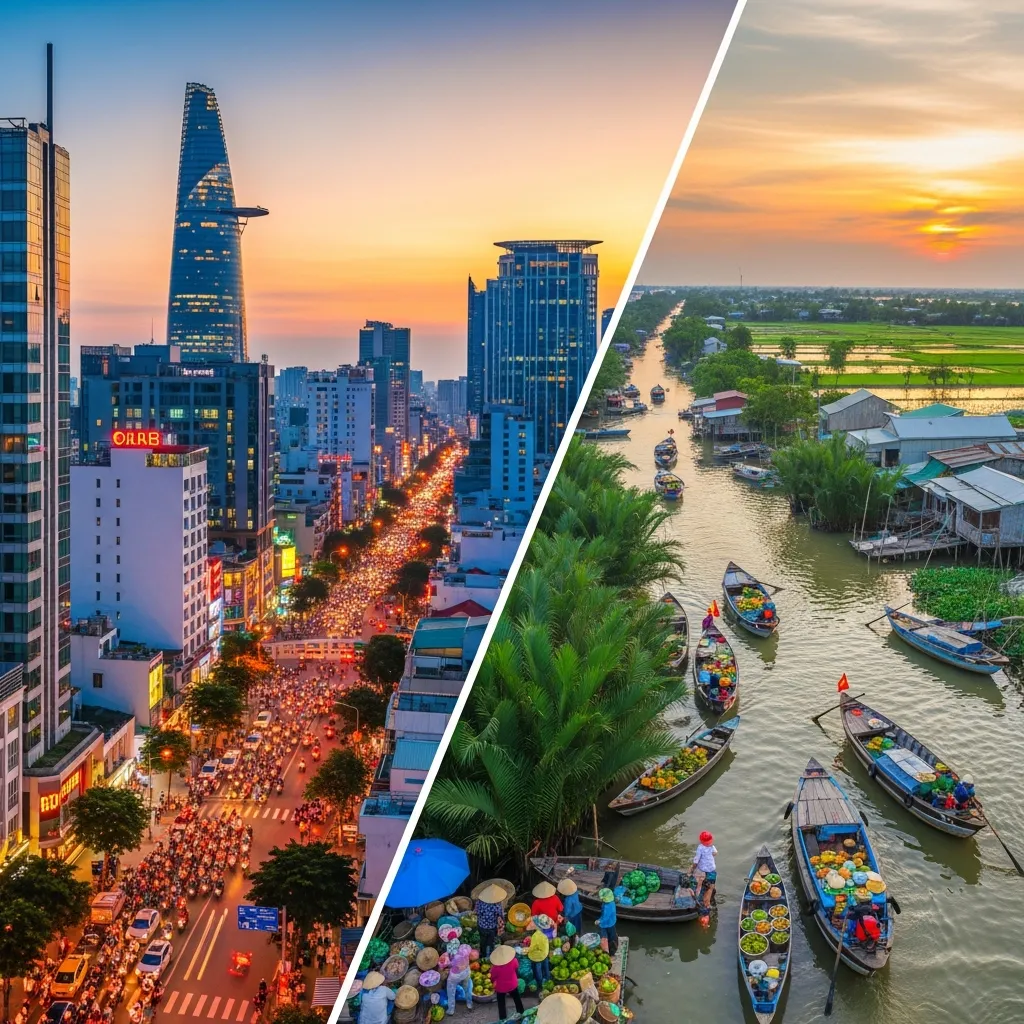
Ho Chi Minh City: How Do You Make the Most of Vietnam’s Largest City?
Ho Chi Minh City (still widely called Saigon) is Vietnam’s economic engine and its most kinetic urban environment. The city moves fast—motorbikes weave through intersections in choreographed chaos, skyscrapers rise beside French colonial facades, and rooftop bars overlook neighborhoods that look entirely different from street level.
Key historical landmarks include the Reunification Palace, where North Vietnamese tanks famously breached the gates in April 1975, and the War Remnants Museum, which offers a sobering and well-documented account of the Vietnam War. Outside the city, the Cu Chi Tunnels—an underground network used by Viet Cong soldiers during the war—can be visited on a half-day tour.
Mekong Delta: What Is Life Like Along Vietnam’s Great River?
The Mekong Delta covers roughly 40,000 square kilometers of southwestern Vietnam, fed by the Mekong River as it fans into the South China Sea. Often called the “Rice Bowl” of Vietnam, the delta produces more than half the country’s rice and the majority of its tropical fruits and seafood.
The floating markets are the region’s most distinctive attraction. Cai Rang Market, near Can Tho, is one of the largest in the delta and operates from pre-dawn until mid-morning, with vendors selling directly from wooden boats piled with produce. Staying in a local homestay along the riverbanks—rather than a city hotel—gives travelers a far more authentic glimpse into daily delta life.
Phu Quoc Island: Is It Still a Hidden Paradise?
Phu Quoc, Vietnam’s largest island, has developed rapidly since direct international flights began in the early 2010s. It’s no longer undiscovered, but its northern and eastern coastlines retain stretches of beach that remain genuinely quiet. The island’s interior is largely protected as a UNESCO-listed national park, with hiking trails through old-growth forest.
The water around Phu Quoc is exceptionally clear, particularly between November and March, making it well-suited for snorkeling and diving. An Thoi Islands, a cluster of small islands off the southern tip, is a popular destination for half-day island hopping tours. The island is also known for its black pepper plantations and nuoc mam (fish sauce) factories, both open to visitors.
Beyond the Mainstream: Vietnam’s Best Hidden Gems
Phong Nha-Ke Bang: The World’s Largest Cave System
Phong Nha-Ke Bang National Park in Quang Binh Province contains the largest known cave passage on Earth. Son Doong Cave, discovered in 1991 and first explored in 2009, measures roughly 5 kilometers in length and contains its own jungle, river, and localized weather system. Expeditions are limited to a small number of groups per year and cost several thousand dollars—but for serious adventurers, it’s genuinely one of the most extraordinary experiences on the planet.
More accessible options within the park include Paradise Cave, which stretches for 31 kilometers, and Phong Nha Cave, navigable by boat along an underground river. The surrounding park, a UNESCO World Heritage Site, is also one of the most biodiverse regions in Southeast Asia.
Con Dao Islands: One of the Best Places to Visit in Vietnam for Nature and Quiet Beaches
Among the best places to visit in Vietnam, the Con Dao Islands remain one of the country’s most underrated escapes. Located around 230 kilometers off Vietnam’s southern coast, this remote archipelago was once known mainly for its historic prison complex, which held Vietnamese political prisoners during the French colonial era and the American war period. Today, Con Dao is equally recognized for its natural beauty, including sea turtle nesting beaches, clear coral reefs, and a protected national park that covers much of the islands.
For travelers looking beyond Vietnam’s busiest tourist hotspots, Con Dao offers a quieter and more exclusive experience. Flights from Ho Chi Minh City take less than an hour, and the island’s limited number of hotels helps preserve its peaceful atmosphere. If you’re searching for hidden gems beyond the usual list of the best places to visit in Vietnam, Con Dao is well worth considering.
Da Lat: A Unique Highland Escape Among the Best Places to Visit in Vietnam
Da Lat stands out among the best places to visit in Vietnam thanks to its cool mountain climate, colonial architecture, and relaxed atmosphere. Set around 1,500 meters above sea level on the Lang Bian Plateau, Da Lat feels very different from Vietnam’s tropical coastal cities. Originally developed by the French as a hill station in the early 20th century, the city still features charming villas, chalets, and one of the country’s most distinctive train stations.
Da Lat is also known as Vietnam’s flower capital, supplying a large share of the country’s flower market. At the heart of the city, Xuan Huong Lake is surrounded by gardens, walking paths, and historic buildings, making it one of the most pleasant urban spots in Vietnam. For travelers who enjoy cooler weather, scenic landscapes, and a slower pace, Da Lat deserves a place on any list of the best places to visit in Vietnam.
Practical Tips for Visiting the Best Places to Visit in Vietnam
What Are the Visa Requirements for Vietnam?
If you’re planning to explore the best places to visit in Vietnam, it’s important to check visa requirements before booking your trip. Vietnam offers e-visas to citizens of many countries, often valid for up to 90 days with multiple entries. Applications are usually processed online within a few business days. Some nationalities may also qualify for visa-free entry for a limited period, but since policies can change, always verify the latest rules before departure.
How Should You Get Around Vietnam?
Getting around the best places to visit in Vietnam is relatively easy thanks to the country’s growing transport network. Domestic flights connect major destinations such as Hanoi, Da Nang, Ho Chi Minh City, and Phu Quoc, making long-distance travel fast and affordable. For a more scenic option, the Reunification Express train links Hanoi and Ho Chi Minh City and offers sleeper cabins for overnight journeys.
Within cities, ride-hailing apps like Grab are widely used and budget-friendly. In destinations such as Hoi An and Hue, cycling is also a practical and enjoyable way to explore.
What Should You Know About Currency and Budgeting in Vietnam?
Vietnam uses the Vietnamese Dong (VND). ATMs are widely available in cities and most tourist areas, though transaction fees vary by bank. Vietnam remains one of Southeast Asia’s most budget-friendly destinations—street food meals typically cost between 30,000 and 60,000 VND (roughly $1.20 to $2.50 USD), while mid-range restaurant meals rarely exceed $10 to $15 per person. Accommodation ranges from $8 to $15 per night for a clean hostel dormitory, to $50 to $150 for a solid mid-range hotel.
What Cultural Practices Should Travelers Respect?
Remove shoes before entering temples and private homes. Dress modestly at religious sites—shoulders and knees covered. Avoid public displays of affection in more conservative areas. When bargaining at markets, keep the process good-natured; aggressive haggling is considered disrespectful. Traveling beyond the footprint of well-trodden tourist paths—particularly in rural and highland communities—requires sensitivity to local customs and a preference for community-owned services over large operators.
How to Find the Best Flight Deals to Vietnam
Flights to Vietnam typically route through major Asian hubs including Bangkok, Singapore, Seoul, Tokyo, or Hong Kong. The best fares usually appear 6 to 12 weeks before departure for international routes.
Google Flights hacks that actually work:
- Use the Explore Map feature on Google Flights to compare fares to multiple Asian gateways simultaneously, then book a separate onward connection to Vietnam.
- Enable Price Tracking on specific routes to receive email alerts when fares drop.
- Search using flexible date grids to identify the cheapest departure windows within a given month.
- Try searching with private/incognito browsing to prevent price inflation from repeated searches (though the evidence for this is mixed).
For families flying with children, booking seats early and selecting exit rows or bulkhead seats gives more legroom. Vietnamese carriers like VietJet allow family pre-boarding, and most international airlines serving Vietnam offer standard child meal options on request.
Start Planning Your Vietnam Trip
Vietnam is a destination that tends to outperform expectations—often significantly. The landscapes are more dramatic than anticipated, the food more complex, the history more layered. Almost every traveler who visits once wants to return.
The best way to approach Vietnam is with a loose plan and a willingness to linger somewhere longer than originally scheduled. Use the Google Flights hacks outlined above to lock in a competitive fare, spend time researching community-based operators for sensitive regions like Sapa and Phong Nha, and build at least one hidden gem into your itinerary beyond the well-worn Ha Long–Hoi An–Saigon circuit.
Vietnam will meet you wherever you are as a traveler. The infrastructure is there for comfort-seekers. The caves and highland trails are there for adventurers. The street food alone is reason enough to book a ticket.
Frequently Asked Questions About the Best Places to Visit in Vietnam
What is the best time of year to visit Vietnam?
The best time to visit the best places to visit in Vietnam depends on the region. Northern Vietnam is ideal from October to April, central Vietnam from February to August, and southern Vietnam is most comfortable during the dry season from December to April.
How many days do you need to explore Vietnam?
To see the best places to visit in Vietnam, two weeks is enough for a multi-region trip, while three weeks is ideal for a full north-to-south journey. If you only have one week, focus on one region for a more relaxed experience.
Is Vietnam safe for solo travelers?
Yes, Vietnam is considered one of the safer destinations in Southeast Asia for solo travelers. Most of the best places to visit in Vietnam are tourist-friendly, but it’s still smart to stay alert in crowded areas and keep valuables secure.
What vaccinations should I consider before visiting Vietnam?
Before visiting the best places to visit in Vietnam, make sure routine vaccines are up to date. Depending on your itinerary, hepatitis A, typhoid, and other travel vaccines may also be recommended, so it’s best to consult a travel clinic before your trip.
Is Vietnam a good destination for vegetarian travelers?
Yes, many of the best places to visit in Vietnam offer great vegetarian and vegan food, especially in cities like Hoi An and Ho Chi Minh City. Just be sure to ask about fish sauce or shrimp paste, which are common in local dishes.
Why is Vietnam considered one of the best places to visit in the world?
Vietnam stands out for its mix of natural beauty, cultural richness, affordable travel, and excellent food. From Ha Long Bay to Hoi An and the Mekong Delta, the best places to visit in Vietnam offer something for almost every traveler.