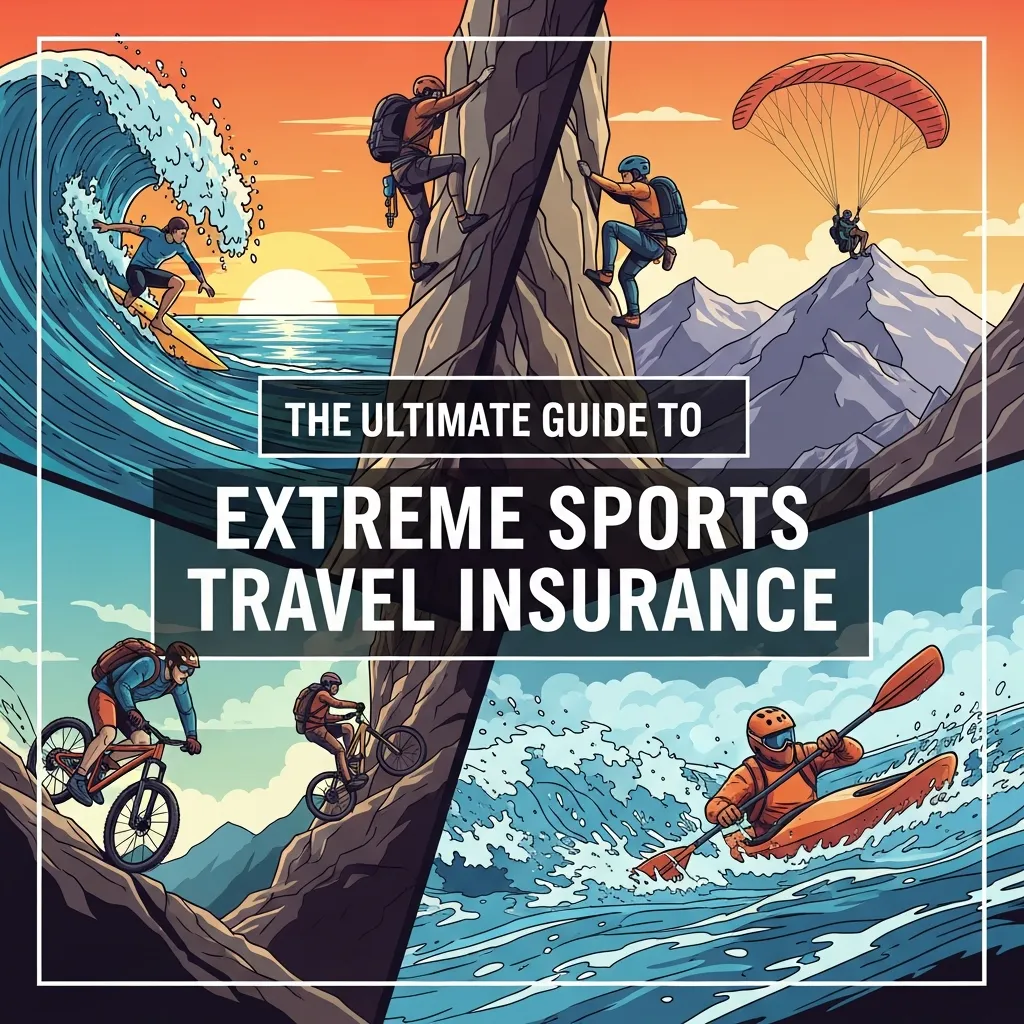
The rush of wind against your face during a skydive, the satisfaction of conquering a towering mountain peak, or the sheer power of riding a massive wave. The thrill of extreme sports draws millions of travelers seeking adventure beyond the typical resort vacation. But with high adrenaline comes high risk. Pushing your physical limits in unfamiliar territories introduces variables that can quickly turn a dream vacation into a medical and financial nightmare.
When you hang glide over the Swiss Alps or scuba dive in deep ocean caves, standard precautions are not enough. A twisted ankle on a local hiking trail is a minor inconvenience. A broken leg on a remote Himalayan trek is a logistical crisis. Securing specialized travel insurance tailored for high-risk activities provides the peace of mind you need to fully immerse yourself in the experience.
This comprehensive guide covers everything you need to know about extreme sports travel insurance. You will learn how to define your activities, understand why standard policies fall short, and discover the key features to look for when choosing the right coverage. By the end of this post, you will be equipped to select a policy that protects both your health and your wallet, allowing you to focus entirely on the adventure ahead.
Defining Extreme Sports: What Is Covered?

Insurance companies have very specific definitions for what constitutes an extreme sport. Understanding these definitions is the first step toward securing the right coverage.
Common Extreme Sports Categories
Extreme sports generally involve high speed, high altitude, a high level of physical exertion, or highly specialized gear. Common categories include aerial sports like skydiving, paragliding, and base jumping. Mountaineering, rock climbing, and ice climbing fall under high-altitude pursuits. Water sports often include cage diving with sharks, white-water rafting (Class IV and above), and deep-sea scuba diving.
Nuances of Extreme vs. Adventure
What you consider a fun afternoon activity, an insurer might classify as a high-risk hazard. For instance, basic zip-lining or snorkeling is usually considered a standard “adventure” activity. However, if you transition from snorkeling to scuba diving below 30 meters, you cross into the “extreme” category. Always check the exact definitions used by your specific insurance provider.Read for another travel 15 Travel Apps & Gadgets
Standard Travel Insurance vs. Extreme Coverage
Standard travel insurance is designed for the average vacationer. It covers lost luggage, flight cancellations, and basic medical emergencies like food poisoning. Extreme sports coverage is a specialized add-on or a standalone policy designed to handle the massive costs associated with remote rescues and severe trauma care.
Why Standard Travel Insurance Falls Short
Relying on a basic travel policy while participating in high-risk sports is a dangerous gamble. Standard policies are riddled with limitations that expose you to massive financial liability.
Typical Policy Exclusions
Read the fine print of a standard travel insurance policy, and you will likely find a long list of excluded activities. Bungee jumping, heli-skiing, and even riding a motorcycle are frequently explicitly excluded. If you get hurt doing something on that list, your insurer will deny your claim entirely.
Limitations on Medical Coverage
Even if a standard policy does not explicitly exclude your sport, the medical coverage limits are often too low. Treating a severe injury sustained during a rock climbing fall can cost hundreds of thousands of dollars, easily exceeding the $50,000 or $100,000 cap of a basic policy.
Inadequate Emergency Evacuation Provisions
Standard policies assume you are relatively close to a modern hospital. If you suffer altitude sickness at Everest Base Camp, you need a helicopter evacuation. Basic insurance rarely covers specialized search and rescue operations or emergency airlifts from remote locations.
Key Features of Extreme Sports Travel Insurance
When shopping for an extreme sports policy, you need to look for specific features that guarantee comprehensive protection.
Comprehensive Medical Coverage
Your policy should cover the immediate and long-term medical needs resulting from an accident.
- Emergency medical treatment: Emergency medical treatment Covers the immediate costs of doctors, ambulances, and emergency room fees.
- Hospitalization and surgery: Covers extended hospital stays and necessary surgical procedures.
- Post-accident rehabilitation: Some premium policies cover physical therapy needed after you return home.
Emergency Evacuation and Repatriation
Getting you to safety is often the most expensive part of an extreme sports accident.
- Air ambulance and transport: Covers the cost of a helicopter or medically equipped airplane to move you to a capable hospital.
- Search and rescue operations: Funds the teams needed to locate and extract you from the wilderness.
- Repatriation of remains: In the worst-case scenario, this covers the cost of returning a body to the home country.
Personal Accident and Disability Benefits
If an accident results in long-term disability or loss of a limb, these benefits provide a lump-sum payment to help manage your future financial needs.
Gear and Equipment Coverage
Extreme sports require expensive gear. Your policy should protect your investment.
- Loss, theft, or damage: Reimburses you if your expensive surfboard, climbing rack, or parachute is stolen or damaged in transit.
- Rental equipment coverage: Covers the cost if you damage gear rented from a local outfitter.
Trip Interruption and Cancellation
Adventure trips are expensive to book.
- Injury-related cancellation: Refunds your prepaid, non-refundable trip costs if you get hurt and cannot continue.
- Weather-related disruptions: Reimburses you if severe weather forces the cancellation of a paid excursion, like a heli-skiing tour.
Personal Liability
If you accidentally collide with another skier on the slopes and cause them injury or damage their gear, personal liability coverage protects you from the resulting lawsuits and replacement costs.
Understanding Policy Nuances and Fine Print
The secret to good insurance is entirely in the fine print. Never purchase a policy without understanding the specific terms.
Specific Activity Coverage
Do not assume your sport is covered just because the policy says “extreme sports.” Look for an explicit list of covered activities. If you plan to go kiteboarding, the word “kiteboarding” needs to be in the approved list.
Geographic Limitations
Some policies exclude specific countries or regions due to political instability or lack of medical infrastructure. Ensure your destination is fully covered.
Age Restrictions and Health Declarations
Many extreme sports policies have age limits. Furthermore, you must honestly declare any pre-existing medical conditions. Failing to disclose a heart condition could invalidate your coverage if you suffer an incident while scuba diving.
Deductibles and Policy Limits
Understand your out-of-pocket costs. A high deductible lowers your premium but means you pay more before the insurance kicks in. Pay close attention to the maximum payout limits for medical and evacuation expenses.
Importance of the Product Disclosure Statement (PDS)
The PDS is the legal document outlining exactly what is and is not covered. Read it thoroughly. It holds the answers to how claims are processed and the specific definitions of terms used by the insurer.
How to Choose the Right Extreme Sports Policy

Selecting the best policy requires a careful assessment of your specific travel plans.
Assess Your Risk Profile
Make a detailed list of every activity you plan to try. Include the maximum altitude you will reach or the maximum depth you will dive.
Compare Quotes from Specialist Providers
Do not just buy the first policy you see. Use comparison tools to look at offerings from companies that specialize in adventure travel, such as World Nomads or Global Rescue.
Read Reviews and Check Reputation
A policy is only as good as the company’s claims process. Look for reviews from other adventure travelers. A company that fights every claim is not worth your money.
Annual vs. Single-Trip Policies
If you take multiple adventure trips a year, an annual multi-trip policy is usually much more cost-effective than buying a new policy for every single vacation.
Real-Life Scenarios and Case Studies
Understanding how insurance works in the real world highlights its immense value.
When Insurance Saves the Day
Consider a hiker trekking in the remote Andes. A sudden rockfall results in a compounded leg fracture. Because they purchased extreme sports coverage, a specialized search and rescue team was dispatched. A helicopter evacuated them to a private hospital in the capital city. The total cost exceeded $60,000, but the traveler paid nothing out of pocket.
Lessons from Inadequate Coverage
Conversely, a traveler went kitesurfing in Southeast Asia with only standard travel insurance. After a severe crash resulting in a spinal injury, their insurance claim was denied because kitesurfing was on the excluded activities list. The traveler’s family had to remortgage their home to pay for a private medical flight back to their home country.
Tips for Staying Safe While Pursuing Extreme Sports
Insurance is your safety net, but prevention is always the primary goal.
Proper Training and Preparation
Never attempt an extreme sport without proper instruction. Take the necessary courses, get certified, and honestly assess your physical fitness before engaging in high-intensity activities.
Use Certified Guides and Operators
Research the companies you book with. Ensure they have certified guides, well-maintained equipment, and strong safety records.
Check Weather Conditions
Nature is unpredictable. Always check local weather forecasts and heed the warnings of local authorities. No adrenaline rush is worth braving a severe storm or an avalanche warning.
The Importance of a Travel Plan
Always tell someone where you are going and when you expect to be back. Share your itinerary with a trusted friend or family member at home, and leave your details with your hotel reception before heading into the wilderness.
Debunking Common Myths About Extreme Sports Insurance
Many travelers skip proper coverage due to persistent misconceptions.
“It is too expensive.”
While extreme sports coverage costs more than standard insurance, it is a fraction of the cost of the trip itself. Paying an extra $100 for proper coverage is negligible compared to a $50,000 medical evacuation bill.
“My regular health insurance will cover it.”
Domestic health insurance rarely covers international care, and it almost never covers the cost of medical evacuation from a foreign wilderness area.
“I am careful, I do not need it.”
You can control your own actions, but you cannot control the environment, the weather, or other people. Accidents happen to even the most careful and experienced athletes.
Secure Your Adventure with the Right Coverage

Extreme sports offer unparalleled ways to experience the world, pushing boundaries and creating memories that last a lifetime. But the inherent risks cannot be ignored. A specialized extreme sports travel insurance policy acts as an essential companion, providing the financial and logistical support needed when things go wrong in remote or challenging environments.
By understanding your specific activities, reading the fine print, and choosing a comprehensive plan, you remove the anxiety of the “what ifs.” You owe it to yourself, and your loved ones, to plan responsibly. Before you pack your parachute, wax your board, or lace up your climbing boots, take the time to secure your adventure. Get a quote from a specialized adventure insurance provider today, and step into the unknown with absolute confidence.Read for : Adventure Travel Insurance
Conclusion
Extreme Sports Travel Insurance is essential for anyone engaging in high-risk adventure activities like skydiving, climbing, or diving. It protects you from expensive medical bills, emergency evacuation costs, and trip disruptions that standard insurance does not cover.
Having the right Extreme Sports Travel Insurance means you can enjoy your adventure with confidence and peace of mind. Before starting any extreme activity, always make sure you are properly covered with reliable Extreme Sports Travel Insurance so you stay safe both physically and financially.