Booking a vacation brings a unique kind of joy. You spend hours researching the perfect destination, securing the best flight times, and finding a hotel with the exact amenities you want. The countdown begins, and the anticipation builds. But life has a habit of throwing unexpected curveballs. A sudden illness, a severe weather event, or a family emergency can instantly force you to abandon your carefully laid plans. When this happens, the disappointment of a missed vacation is often compounded by a harsh financial reality.
Travel involves significant upfront costs. Airlines, cruise lines, and tour operators typically require non-refundable deposits or full payments months in advance. If you are forced to back out at the last minute, you risk losing thousands of dollars. This financial vulnerability is exactly why travel protection has become increasingly necessary. The global landscape is unpredictable, and travelers need a safety net that protects their hard-earned money from sudden disruptions.
This is where trip cancellation insurance steps in to save the day. It acts as a financial shield, reimbursing you for pre-paid, non-refundable expenses if you have to cancel your trip for a covered reason. Trip cancellation insurance is a vital tool for safeguarding travel investments and ensuring peace of mind, allowing you to look forward to your getaway without the lingering fear of financial loss.
Understanding the Basics of Trip Cancellation Insurance
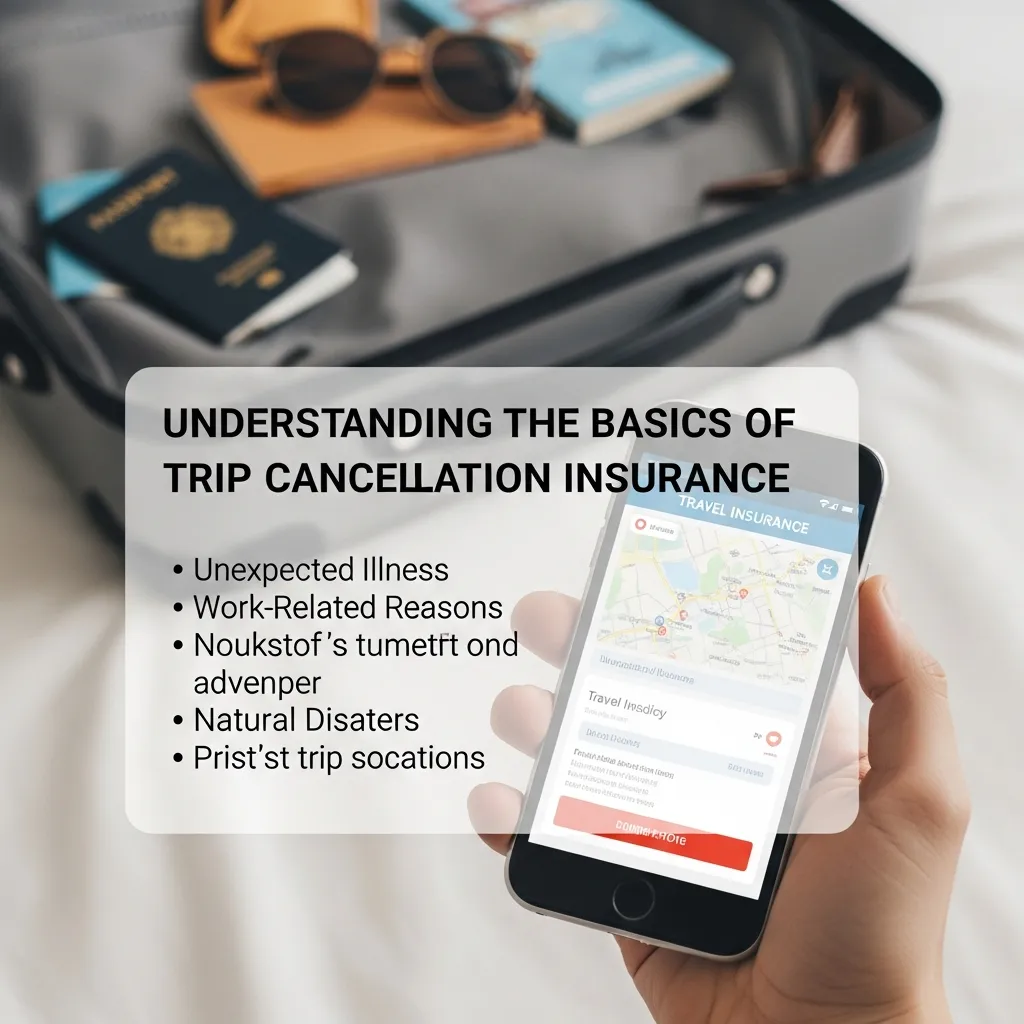
To make the most of travel insurance, you need to understand exactly what you are buying. Trip cancellation insurance is a specific type of coverage designed to reimburse you if your trip is called off before you even leave home.
What does it cover?
The primary purpose of this insurance is to cover non-refundable expenses. This includes the cost of airline tickets, hotel reservations, cruise fares, and prepaid tours or excursions. If you booked a non-refundable villa in Italy and break your leg two days before departure, this policy helps you recoup that lost money.
However, you cannot simply change your mind and expect a refund. Policies strictly define “covered reasons” for cancellation. Common covered reasons include:
- Unforeseen illness, injury, or death involving you, a travel companion, or an immediate family member.
- Severe weather or natural disasters at your destination or home.
- Unexpected job loss or sudden required work relocations.
- Being called for jury duty or subpoenaed as a witness.
- Terrorist incidents at your destination shortly before your arrival.
How does it work?
If a covered event occurs, you must first cancel your arrangements with your travel providers (airlines, hotels, etc.). Any partial refunds or credits they provide are deducted from your total loss. You then file a claim with your insurance provider for the remaining non-refundable balance.
The claims process requires substantial documentation. You will need to provide proof of your original payments, the cancellation policies of your travel providers, and evidence of the reason for cancellation. If you cancel due to illness, you must provide a detailed note from a licensed physician confirming that you were medically unable to travel.
Key terms and definitions
Navigating insurance policies is easier when you understand the terminology.
- Per-person coverage: Policies are often priced and capped based on the individual traveler. If a policy covers up to $5,000 per person, a family of four would have up to $20,000 in total coverage.
- Pre-existing conditions: This refers to any medical condition for which you sought treatment or experienced symptoms in the months leading up to buying the policy (usually a 60- to 180-day “look-back” period). Standard policies often exclude cancellations related to these conditions unless you purchase a specific waiver.
Why Trip Cancellation Insurance is Essential for Every Traveler
Many travelers view insurance as an unnecessary add-on, assuming their plans are set in stone. However, the benefits extend far beyond simply getting your money back.
Financial protection against unforeseen circumstances
Consider the cost of a modern vacation. A multi-generational family cruise or a specialized African safari can easily cost upwards of $10,000 to $20,000. These are high-stakes financial investments. If a parent falls severely ill a week before the trip, canceling is the only option. Without insurance, that entire investment evaporates. Trip cancellation coverage ensures that a personal tragedy does not also become a financial disaster.
Peace of mind during the planning phase
Planning a trip should be enjoyable, but worrying about the “what ifs” can ruin the experience. When you purchase a policy, you transfer the financial risk to the insurance company. This allows you to finalize your itinerary, book expensive excursions, and count down the days with genuine excitement, knowing your money is protected.
Beyond basic refunds
Direct cancellations with airlines or hotels often result in vouchers or travel credits, not cash refunds. These credits usually come with strict expiration dates and blackout periods, forcing you to travel on their terms. Trip cancellation insurance provides cash reimbursement, giving you the ultimate flexibility to rebook your trip when the time is truly right for you.
Types of Trip Cancellation Insurance
Not all policies are created equal. Travelers have several options when selecting coverage, each with its own advantages and limitations.
Standalone policies
Purchased directly from travel insurance companies, standalone policies offer the most comprehensive and customizable coverage. You can tailor the limits, add medical coverage, and ensure the policy fits your exact itinerary. These policies provide the highest level of protection and the clearest definitions of covered reasons.
Travel package policies
When booking a cruise or a guided tour, the provider will often offer their own bundled insurance. While convenient, these policies are sometimes heavily weighted in favor of the provider. They might offer future travel credits instead of cash refunds or have lower limits for medical emergencies. Always read the fine print before accepting a bundled package.
Credit card travel insurance
Many premium travel credit cards offer built-in trip cancellation coverage if you use the card to pay for the trip. This is a fantastic perk, but it comes with significant limitations. Credit card coverage usually caps out at lower amounts (e.g., $5,000 to $10,000 per trip), which may not cover a luxury vacation. They also tend to have stricter definitions of covered reasons and may not cover traveling companions who are not immediate family.
“Cancel for Any Reason” (CFAR) insurance
Standard policies require a covered reason to trigger a payout. If you simply decide you no longer want to go, or if you are afraid to travel due to a localized issue not covered by the policy, you get nothing. CFAR insurance changes the rules. It allows you to cancel for literally any reason—fear of an outbreak, a sudden breakup, or just changing your mind.
CFAR is an optional upgrade that must typically be purchased within 14 to 21 days of making your first trip deposit. It usually reimburses 50% to 75% of your prepaid costs, rather than 100%. Because of the incredible flexibility it offers, CFAR coverage significantly increases the overall cost of your insurance premium.
What to Look for When Choosing a Policy
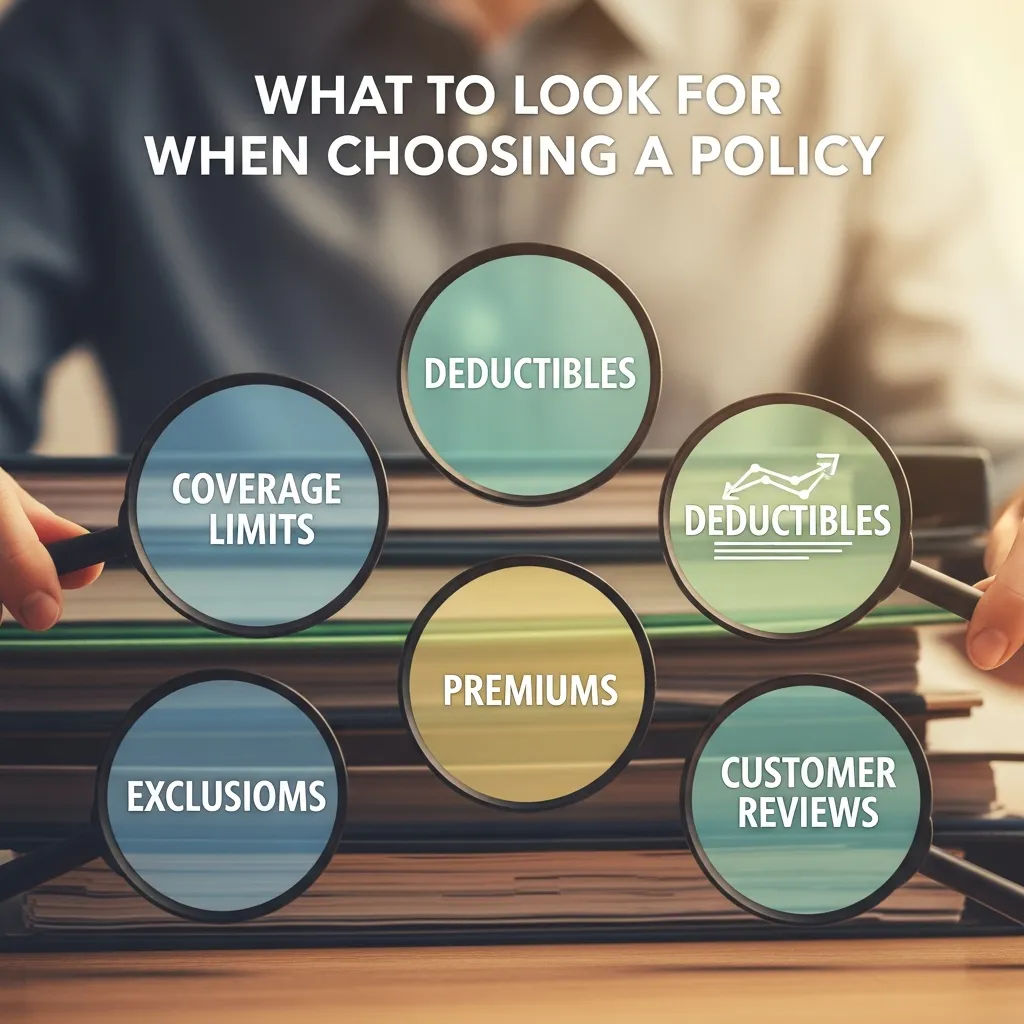
Selecting the right policy requires careful comparison. Do not simply click the cheapest option at checkout.
Coverage limits and deductibles
Ensure the policy’s maximum limit exceeds the total non-refundable cost of your trip. If your safari costs $15,000, a policy capped at $10,000 leaves you dangerously exposed. Additionally, check for deductibles. While most trip cancellation policies do not have deductibles, related coverages (like emergency medical) might.
Covered reasons for cancellation
Scrutinize the fine print detailing exactly what is covered. Does the policy cover a destination becoming uninhabitable? Does it cover a required work relocation? Ensure the covered reasons align with your personal risk factors.
Exclusions
Insurance companies are very clear about what they will not cover. Common exclusions include participating in risky activities (skydiving, backcountry skiing), traveling against government advisories, or canceling due to a known, named hurricane. Pre-existing medical conditions are also standard exclusions unless you purchase the policy early enough to secure a pre-existing condition waiver.
Customer service and claims processing reputation
A policy is only as good as the company backing it. Research customer reviews regarding the claims process. Look for providers known for fair, transparent, and prompt payouts. A company that makes it impossible to contact a representative during an emergency is not worth your money.
Cost vs. benefit analysis
Expect to pay between 4% and 10% of your total trip cost for comprehensive travel insurance. Weigh this premium against the financial risk of losing your prepaid expenses. For a cheap weekend getaway, the cost might not be justified. For a two-week international honeymoon, it is an essential investment.
The Impact of External Factors on Trip Cancellation
Travel is inherently vulnerable to global and localized events. Understanding how insurance responds to these factors is crucial.
Natural disasters and extreme weather events
A hurricane barreling toward your beachfront resort is a classic covered reason for cancellation. However, timing matters. You must purchase the policy before the storm is officially named by meteorological organizations. Once a storm is a known event, buying insurance to cover it is no longer an option.
Political unrest and travel advisories
If a sudden riot or political uprising occurs at your destination, standard policies will often cover cancellation. However, if a destination has a long-standing government travel advisory advising against all travel, standard policies will likely exclude coverage for that location.
Personal emergencies
The most common reasons for claims are deeply personal. An unexpected medical diagnosis, a severe accident, or the sudden passing of an immediate family member are universally covered reasons. Policies typically require strict documentation, such as death certificates or physician statements, to process these sensitive claims.
Pandemics and health crises
The landscape of travel insurance shifted dramatically in recent years. Many standard policies now explicitly exclude cancellations due to general fear of a pandemic or border closures. However, if you physically contract a virus like COVID-19 before your trip and a doctor orders you not to travel, standard medical cancellation rules apply. For broader protection against pandemic-related border closures, a CFAR policy is required.
Common Misconceptions
Travelers often skip insurance based on a few pervasive myths. Let us clarify the facts.
“My credit card covers everything.”
As mentioned earlier, credit card coverage is a great starting point, but it rarely covers everything. The limits are often too low for expensive trips, the definitions of covered reasons are exceptionally narrow, and medical coverage is usually minimal or non-existent. Always read your card’s benefits guide before assuming you are fully protected.
“It’s too expensive.”
Paying $300 for insurance on a $5,000 trip might feel like a steep added fee. However, viewing it as a percentage of your total investment provides better perspective. Protecting a $5,000 asset for a few hundred dollars is standard financial risk management.
“I’m a careful planner, I won’t need it.”
You can plan your itinerary down to the minute, but you cannot plan your health, the weather, or global events. Insurance does not protect against poor planning; it protects against the entirely unpredictable variables of life.
When to buy insurance
The ideal time to buy trip cancellation insurance is immediately after you make your first trip deposit. Purchasing within the first 14 to 21 days unlocks valuable time-sensitive benefits, such as the pre-existing medical condition waiver and the ability to add CFAR coverage.
Case Studies and Scenarios
To illustrate the practical value of this coverage, let us look at some realistic scenarios.
Scenario A: The Medical Emergency
Sarah and Mark spent $8,000 on a non-refundable European river cruise. Three days before their flight, Mark suffered a severe appendicitis attack requiring emergency surgery. Because they purchased a comprehensive standalone policy, they provided the insurance company with Mark’s medical records and a doctor’s note advising against travel. The insurance company reimbursed the full $8,000, allowing them to focus entirely on Mark’s recovery.
Scenario B: The Hurricane Heartbreak
The Johnson family booked a $6,000 stay at a Caribbean resort in September. They decided to save money and skip travel insurance. A week before their trip, a Category 4 hurricane severely damaged the island, forcing the resort to close. The resort offered them a voucher for a future stay, valid for one year. The Johnsons, unable to secure time off work the following year, lost their $6,000 investment entirely. Had they purchased insurance before the storm was named, they would have received a full cash refund.
How to File a Claim
If the worst happens and you need to cancel, follow these steps to ensure a smooth claims process.
Immediate notification
Notify your travel providers (airlines, hotels, tour operators) the moment you know you cannot travel. Cancel your reservations to minimize the financial loss on their end. Next, contact your insurance provider immediately to open a claim and receive exact instructions on how to proceed.
Gathering necessary documentation
Documentation is the key to a successful claim. Gather all original receipts, invoices, and credit card statements proving you paid for the trip. Collect the cancellation policies from your providers showing that the expenses were non-refundable. Finally, secure the proof of your covered reason—this is usually a detailed medical form filled out by your physician.
Working with your insurance provider
Submit your documentation clearly and promptly. Be prepared to answer follow-up questions from the claims adjuster. Keep copies of everything you submit and maintain a log of all phone calls and emails with the insurance company. Patience is necessary, as claims can take several weeks to process.
Secure Your Next Adventure

Traveling is an investment of your money, your time, and your emotional energy. Trip cancellation insurance serves as a vital safeguard, ensuring that unforeseen emergencies do not drain your bank account. By understanding the types of coverage available, reading the fine print, and purchasing your policy early, you can navigate the unpredictable nature of travel with confidence.
Before you finalize your next getaway, take a moment to evaluate your financial exposure. Research different providers, compare policies, and secure the appropriate coverage. Protecting your travel investment is the smartest first step on any journey. read more : Backpacker Travel Insurance
Conclusion – Trip Cancellation Insurance
Travel plans can change in an instant, no matter how carefully you organize your trip. That’s why Trip Cancellation Insurance is an essential part of modern travel planning. It protects your financial investment by covering non-refundable expenses when unexpected events force you to cancel your trip.
From medical emergencies and natural disasters to sudden personal or work-related issues, Trip Cancellation Insurance ensures that you don’t lose thousands of dollars due to circumstances beyond your control. By choosing the right policy, understanding coverage details, and purchasing early, you can travel with confidence and peace of mind.
In the end, investing in Trip Cancellation Insurance is not just about protecting your money—it’s about protecting your entire travel experience.
Frequently Asked Questions (FAQ) – Trip Cancellation Insurance
1. What is Trip Cancellation Insurance?
Trip Cancellation Insurance is a type of travel insurance that reimburses you for non-refundable travel expenses if you need to cancel your trip for a covered reason, such as illness, emergencies, or unforeseen events.
2. What does Trip Cancellation Insurance cover?
Most Trip Cancellation Insurance policies cover expenses like flight tickets, hotel bookings, cruise fares, and prepaid tours if your trip is canceled due to covered reasons like medical emergencies, severe weather, or family emergencies.
3. What are “covered reasons” in Trip Cancellation Insurance?
Covered reasons in Trip Cancellation Insurance typically include illness, injury, death of a family member, natural disasters, job loss, or legal obligations like jury duty. Each policy clearly defines these conditions.
4. Does Trip Cancellation Insurance cover any reason for cancellation?
No, standard Trip Cancellation Insurance only covers specific listed reasons. However, you can add “Cancel for Any Reason” (CFAR) coverage for more flexibility.
5. When should I buy Trip Cancellation Insurance?
It is best to purchase Trip Cancellation Insurance immediately after booking your trip. Early purchase ensures maximum coverage and may include benefits like pre-existing condition waivers.
6. Does Trip Cancellation Insurance cover pre-existing conditions?
Basic Trip Cancellation Insurance plans usually do not cover pre-existing conditions. However, some providers offer coverage if you meet certain conditions and buy the policy within a specific time frame.